[Expert Techniques for Bluefin Tuna]
Captain Seiichiro Tashiro’s Bluefin Tuna Game on the Sunrise
Explaining Tactics as Both Captain and Angler!
Seiichiro Tashiro is the captain of the popular charter boat Sunrise Shinkai in Yobuko, Saga Prefecture, and is also an accomplished angler across various disciplines. While his Sunrise field—covering the Genkai Sea, Tsushima, the Goto Islands, and the Menami Islands—gives him a strong reputation as a yellowtail angler, he has also pursued bluefin tuna since the charter boat's founding. He guides clients on his own vessel and continues challenging himself through expeditions, positioning bluefin as his ultimate target and passionately pursuing it. We asked Captain Tashiro to explain the bluefin tuna game from both an angler's and a captain's perspective.
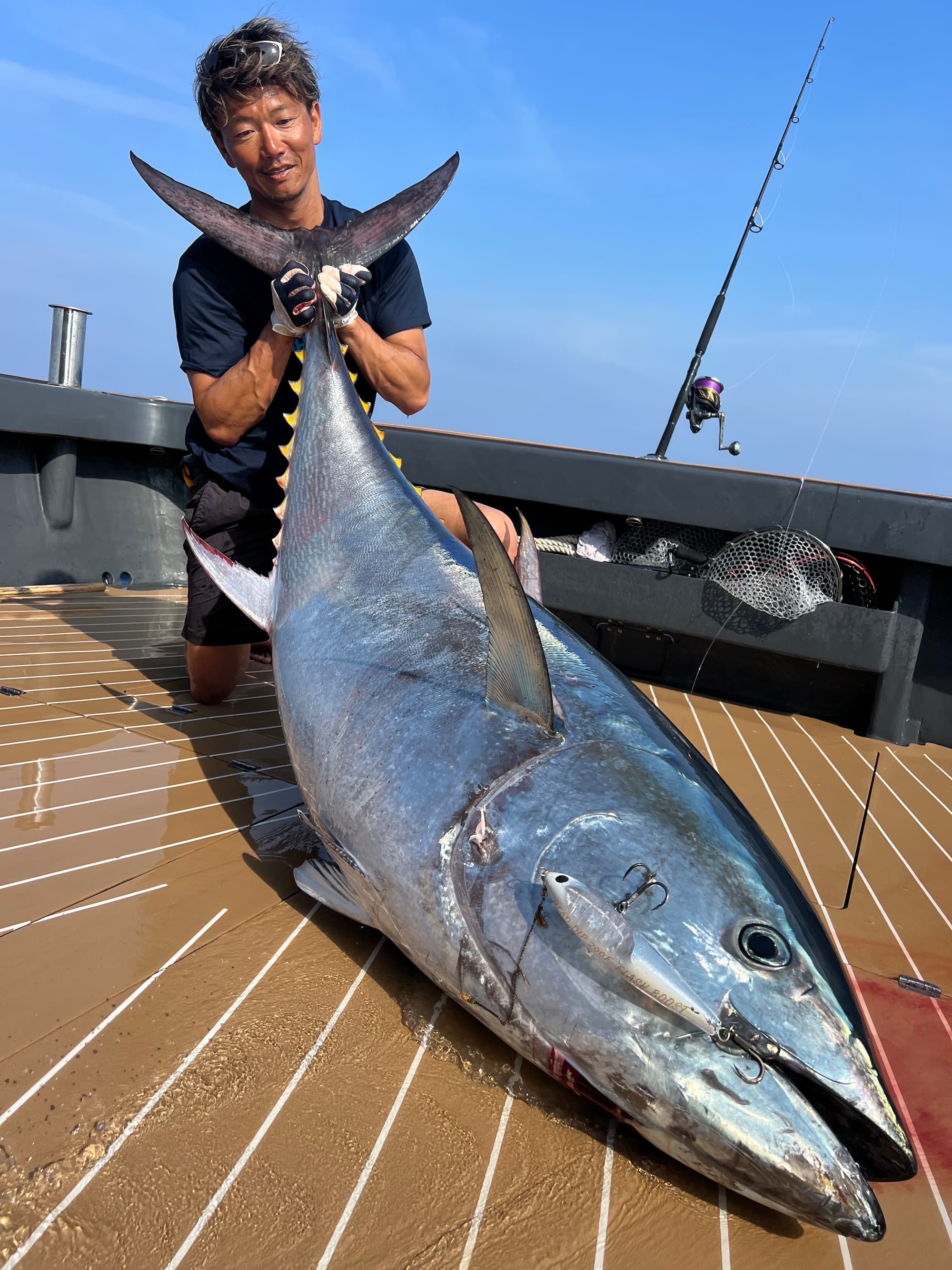
Mr. Tashiro's 117kg catch in the Genkai Sea. His personal best in Japan. This ultimate offshore target has been pursued for years, both from his own boat and overseas.
INDEX
- 2025 Bluefin Tuna Fishing in Japan
- The founding days of the charter boat company, when they became obsessed with catching bluefin tuna
- Chasing Tuna as an Angler and as a Captain
- Selecting Reel Size and Line Based on Expected Size
- Select a rod with the strength to lift your target size
- Preparing the Line, Preparing the Reel
- Line Selection for Sustained Initial Performance
- Lure Selection: Don’t Be Misled by Bait Size
- Treble hooks are the main choice
- Approaches Based on Bluefin Tuna Conditions
- Handling the Hit and Fighting Techniques
- Essential Items Beyond Tackle
- What a captain does and considers during bluefin tuna fishing.
2025 Bluefin Tuna Fishing in Japan
For 2025, bluefin tuna recreational fishing has monthly catch limits set by the Fisheries Agency: an annual total of 60 tons, with a monthly limit of 5 tons (3 tons from September onward). This limit may fluctuate if the previous month’s catch exceeds the quota. The 2025 season begins April 1st. Catch reporting is mandatory. Fishing is prohibited for tuna under 30kg. For tuna over 30kg, the limit is one fish per angler per month, and must be reported within one day of landing.
The quota resets at the start of each month. Fishing is prohibited once the monthly quota is reached. Given this, the quota is often filled within the first few days of the month. To allow more anglers to participate, some boats encourage catch-and-release. Releasing should be done in consultation with the captain, who is experienced with releases, and fellow anglers on the boat.
Furthermore, fishing for tuna, which are vastly larger than humans, carries risks of accidents during the fight and landing, as well as unexpected damage to equipment. Actual injuries and equipment issues have been reported. Recognize that fishing is undertaken at your own risk. Please enjoy it while ensuring adequate safety. For tuna fishing, acquire solid knowledge and the physical stamina required to handle large fish before attempting it.
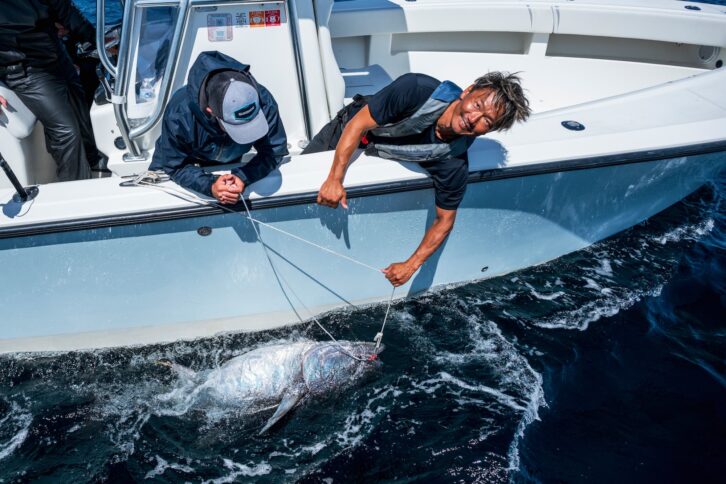
On a 2025 Boston fishing trip. Photo courtesy of Shimano.
The founding days of the charter boat company, when they became obsessed with catching bluefin tuna
The charter boat Sunrise Shinkai, helmed by Mr. Seiichiro Tashiro. Renowned for landing large amberjack and yellowtail amberjack, it’s a charter boat every offshore angler has heard of and dreams of riding someday. Mr. Tashiro is passionately committed to catching large fish. While he often captains expeditions targeting bluefin tuna in the Genkai Sea, he himself has pursued large bluefin tuna for years on fishing expeditions both domestically and internationally. His history with bluefin tuna dates back to the founding of his charter boat business.
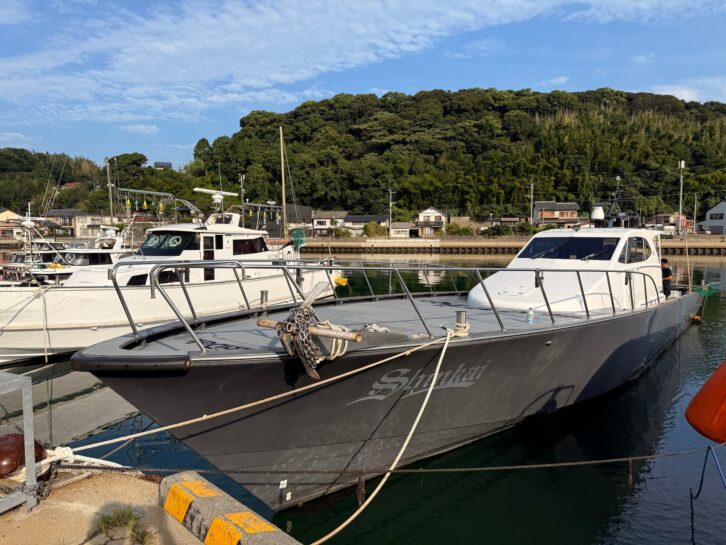
Captain Seiichiro Tashiro operates and helms the Sunrise Shinkai. This popular charter boat departs from Yobuko, Saga Prefecture. Equipped with high-performance gear, this fast vessel pursues large amberjack and, depending on the season, bluefin tuna. Mr. Tashiro’s encounter with bluefin tuna predates the founding of his charter business.
“I first encountered bluefin tuna in January 2005. It was before I started the charter business, during New Year’s when I went to Shichirigasone on a friend’s boat. I saw a brown mass that looked like seaweed, with fish charging into it. Not knowing what it was, I kept casting. Later, I learned the brown mass was squid bait balls, and the fish charging in were tuna. That was my first time seeing bluefin tuna at sea. Later, in April, I chartered a boat and went out with an acquaintance using a Thai Rubber lure. On the way back, we encountered a school of tuna unlike any I’d ever seen. Seeing them, I thought, ‘Someday, I want to catch one.’ Then, in May, I started my business with the boat ‘Shimotsuki,’ the predecessor to Sunrise. A couple came aboard that boat. On the first day, we fished for grouper. On the second day, just for fun, we headed to Shichirigasone to see the bluefin tuna. Then we spotted a school of flying fish. We only had jigging tackle, but we chased it with abandon. That customer was so moved by the scene that they came back for 20 consecutive days. But since we didn’t know how to fish them, it wasn’t easy to catch one. After much trial and error, we even tried using frozen flying fish. In the end, using that flying fish, I caught my first 20kg bluefin tuna from my own boat. After that, customers started coming, and I remember the tuna fever really taking off.”
This was still before yellowtail casting was established. Back then, the big game offshore casting targets established domestically were GT and yellowfin tuna on expeditions. As for bluefin tuna in Japan, it was around the time passionate anglers in Aomori were starting to establish it through trial and error. It was at this very moment that Mr. Tashiro also began challenging bluefin tuna in the Genkai Sea—the very place where he decided to start his charter boat business.
“Back then, there were quite a few of them, and we gradually started catching them. Sizes were 50kg, 60kg. We were chasing tuna like mad. People today might think of me as a yellowtail specialist, but those who knew me back then probably think of me as a tuna guy (laughs). We’d depart at 3 AM and return at 9 PM. There was even a stretch where we went out targeting tuna for 39 consecutive days. Back then in the Genkai Sea, we didn’t use tackle like today’s; we used PE 4 to 6. Since many schools sank immediately when they surfaced, we prioritized casting distance. Fishermen were catching large ones, but with lures, the really huge tuna just wouldn’t bite. Then, in late July 2006, purse seine boats arrived, and the tuna population during this season dropped dramatically. Because of that, I started targeting tuna in winter based on migration patterns, but during other seasons, I focused on developing casting techniques for yellowtail.
Chasing Tuna as an Angler and as a Captain
After that, Mr. Tashiro challenged himself as an angler, seeking large tuna in Aomori, then in North Carolina and Boston, USA. During his American expeditions, he reportedly landed fish weighing 145kg and 180kg.
“Experiencing fishing in America allowed me to absorb many things and pushed me to test various aspects: tackle selection, tackle strength, line systems, fighting techniques, my own physical and mental stamina and power, and coordination with the captain. I realized that without all these elements, you simply cannot land the fish.”
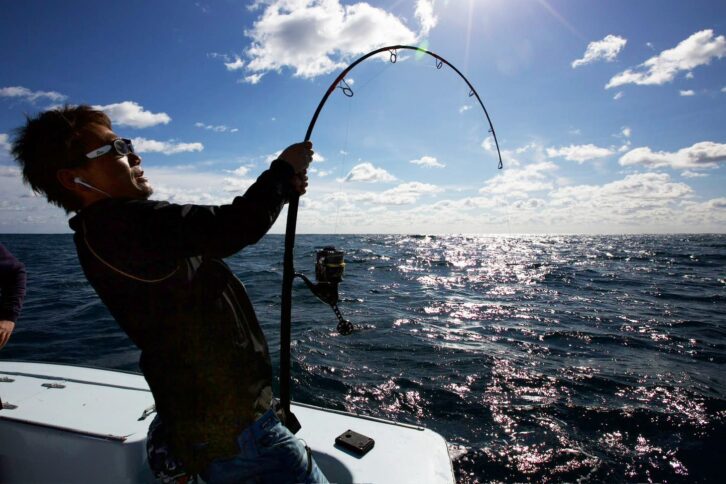
Fighting large tuna requires perfection in every aspect. Photos from expeditions to the United States in 2012 and 2015. Photo courtesy: Seiichiro Tashiro
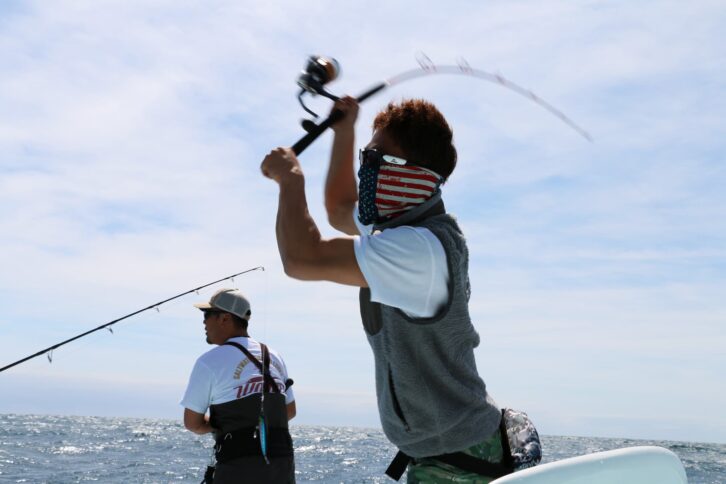
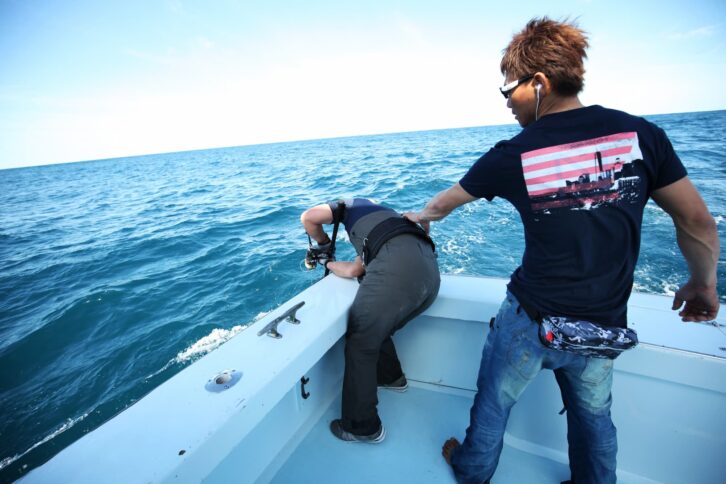
Mr. Tashiro embarked on an expedition to the Atlantic Ocean in the United States in 2012 in pursuit of bluefin tuna. He challenged himself again in 2015. At the time, opportunities to encounter tuna in Japan had dwindled due to declining stocks, so he joined fellow anglers seeking tuna on these expeditions. He took on the challenge to improve his own skills. The experiences gained by these experts have contributed to the evolution of modern tackle. Photo courtesy: Seiichiro Tashiro
In recent years, large numbers of bluefin tuna have begun migrating into the Genkai Sea. Consequently, when the catch quota hasn’t been reached, Mr. Tashiro, as a captain, pursues tuna alongside his clients. And unlike before, large bluefin tuna can now be caught using lures in the Genkai Sea. This is because bluefin tuna stocks are recovering, creating a situation where both numbers and size are promising. Furthermore, the establishment of fishing methods and the evolution of tackle driven by manufacturers’ efforts and ideas are also contributing positively.
“When bluefin tuna became scarce, we’d joke among friends about only catching a ‘glimpse’ of them. But everyone was passionate about it, and we were challenging ourselves through trial and error more than we are now, so it’s a fun memory in its own way. Recently, there are quota issues, but I think the chances of catching them have increased, and more people can take on the challenge. For me now, with domestic tuna fishing limited to just a few days due to quotas, it’s hard to take on the challenge from my position as a captain. But if the timing works out, I want to keep challenging myself in other domestic spots and overseas as well.”
Mr. Tashiro continues to pursue larger fish in his daily fishing. Regarding bluefin tuna, his immediate goal is to surpass his personal record of 180kg caught in the United States.
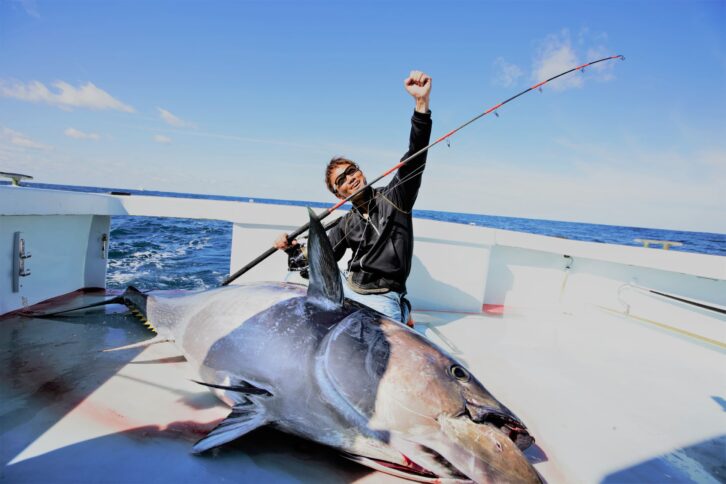
His personal record of 180kg caught in the Atlantic in 2015. Photo courtesy: Seiichiro Tashiro
Selecting Reel Size and Line Based on Expected Size
Anglers who love or are interested in bluefin tuna are likely aware of the recent migration patterns of large tuna within Japan. Currently, tuna ranging from small to large sizes can be targeted in various locations.
“Limiting ourselves to Japan, it seems the schools are divided into groups of 30-50kg, 50-100kg, 100-150kg, and over 150-200kg. Which group is migrating varies by season and region. In the Genkai Sea, the 2025 season had an average size of 150kg, with occasional 80kg-class fish mixed in.”
Mr. Tashiro selects his tackle based on the size of these groups.
For schools primarily consisting of 30-50kg individuals, he selects a Stella SW14000 reel, PE6 line, and a 140lb nylon leader. He ties a 30-size Zylon knot approximately 15cm from the tip.
“When they’re feeding on sardines, they tend to swallow them whole. I tie on the Zylon knot to prevent leader breaks from the tuna’s teeth. However, when the bite is slow and they aren’t swallowing the sardines whole, I find the hit rate is higher without the Zylon knot.”
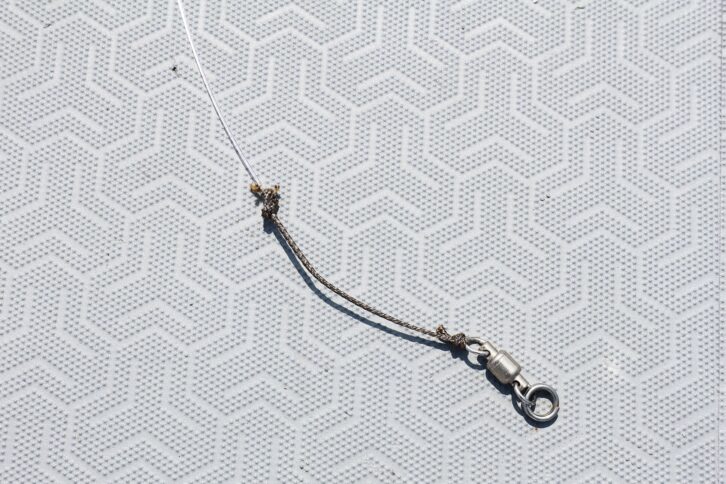
A Zylon knot is tied at the leader tip to prevent damage from teeth and to ensure the knot holds tight.
For schools of 50kg to 100kg class tuna, select PE8 tackle. Leader is nylon 150lb. For 100-150kg, use PE10 with a nylon leader of 180lb. For over 150kg, use PE12 with a nylon leader of 220lb. The reel used is the Stella SW18000HG.
“For #10 and #12, the Yumeya 20 Stella 20000MAX spool is ideal. For targeting large tuna with PE12, this spool is the standard choice.”
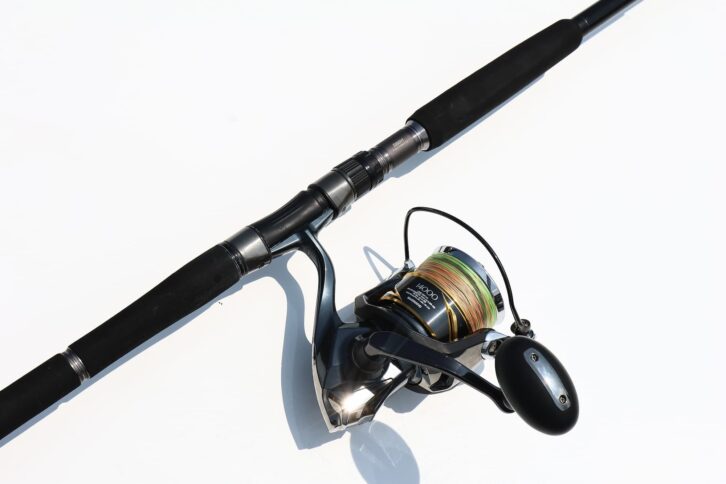
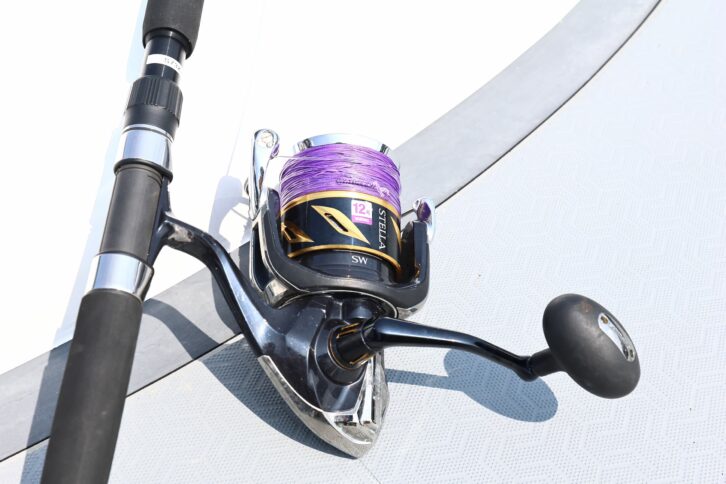
The Stella SW is the only reel choice. For 30-50kg, select the 24 Stella SW14000XG; for larger sizes, choose the 18000HG.
【Shimano 24 Stella SW】
https://fish.shimano.com/ja-JP/product/reel/largespinning/a075f000043mjvrqag.html
【Shimano Stella SW】
https://fish.shimano.com/ja-JP/product/reel/largespinning/a075f00002nt4thqai_p.html
At the end of the leader, for sizes 8, 10, and 12, tie a size 40 or 50 Zylon knot. When fish are highly active and large ones are biting one after another, connect a longer leader, such as 20 cm or 30 cm, as they often swallow the lure. Also, when targeting large tuna, the fight can be long, and adding Zylon can prevent the knot from loosening.
“I tie the Zylon myself, but I also recommend the Ultimate Fighting Leader sold by Varivas, which comes with the Zylon already attached.”
Incidentally, when I asked about reel selection, he said he uses the Stella SW30000 when targeting super-large fish and selecting PE15 line. However, he said that the drag power of the 20 model is lower than that of the 18000, and that it may ultimately be necessary to hold down the spool during the fight.
“I’ve wound PE15 line many times and fought large fish while holding down the spool. But even then, there were some tuna that wouldn’t come up. For tuna like that, I think selecting PE15 is necessary. Also, when bluefin tuna are biting one after another, several people on the boat may be casting, and you may get double or triple hits. In such situations, the boat cannot follow up immediately, so I think it’s a good idea to choose a reel with PE15 wound on a 30000.
Regarding leader length, he uses a length slightly longer than the fish’s body length. For a 200kg-class fish, assuming a fork length of 2m 10cm, he ties on about 2m 50cm. This is to handle situations where the line gets tangled around the fish’s body, allowing the leader section to manage it.
“I always tie the leader length just barely exceeding the fish’s body length. The reason is to minimize guide interference at the PE line-leader connection point as much as possible and maximize casting distance. Depending on the selected rod, it can be short, and the knot might get caught in the spool, but I aim to keep the leader as short as possible and cast with my finger on the PE line.”
[Tashiro-style Zylon Knot Tying]
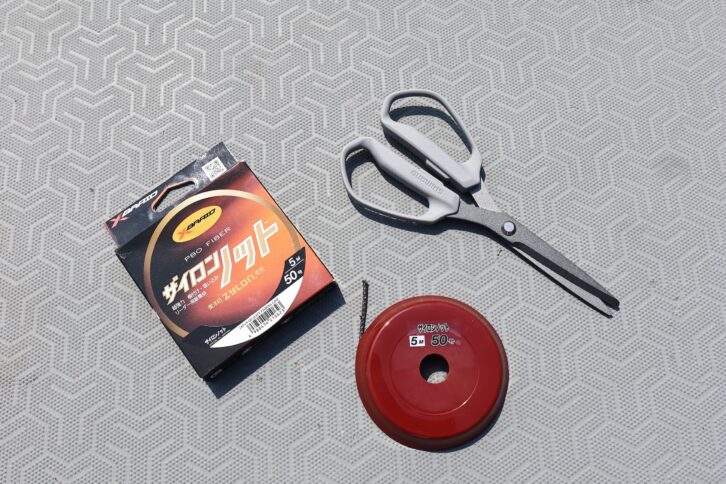
Connect the Zylon knot to the leader tip. Use 30, 40, or 50-weight Zylon knot depending on the line size.
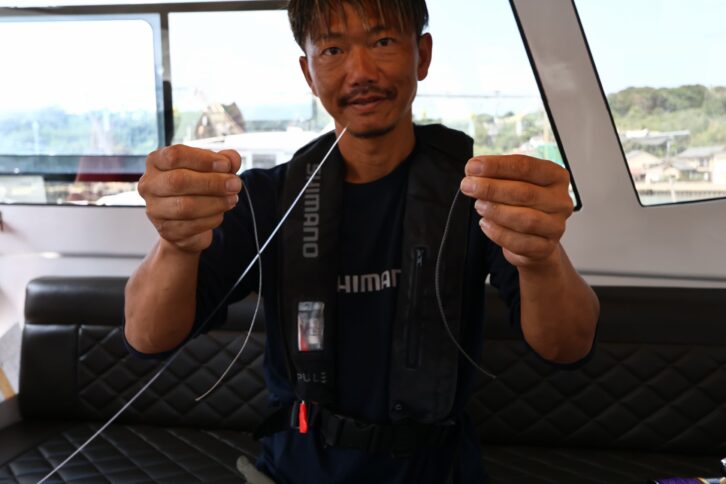
① Cut the Zylon line to about twice the desired knot length and remove the core. You’ll need scissors strong enough to cleanly cut the tough Zylon knot.
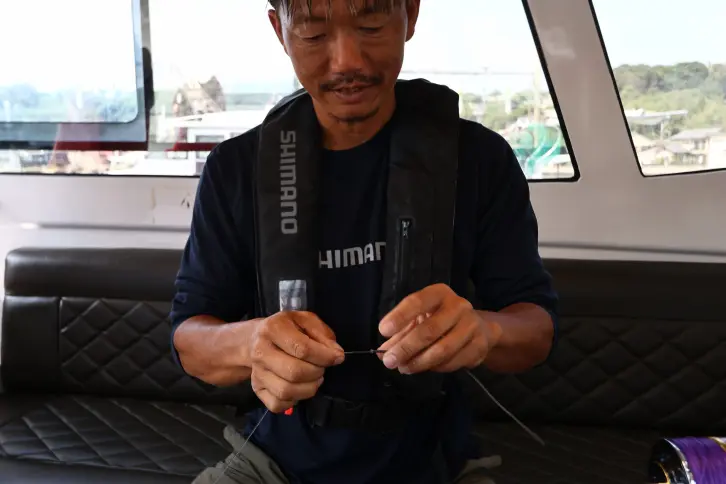
② Thread the leader through the Zylon knot.
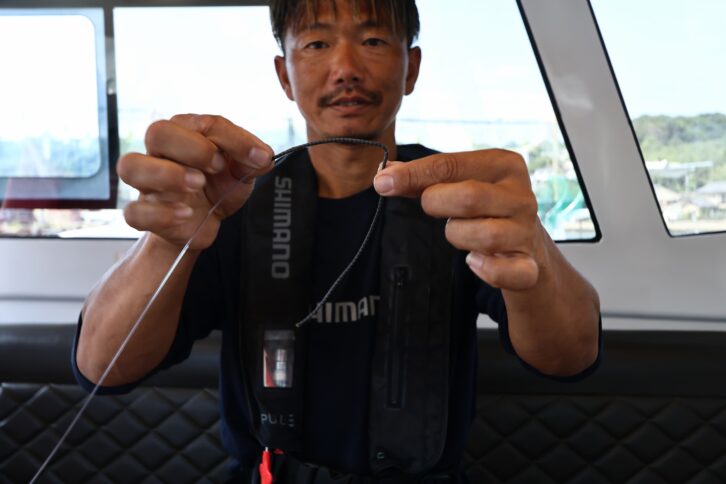
③ Thread it through approximately halfway.
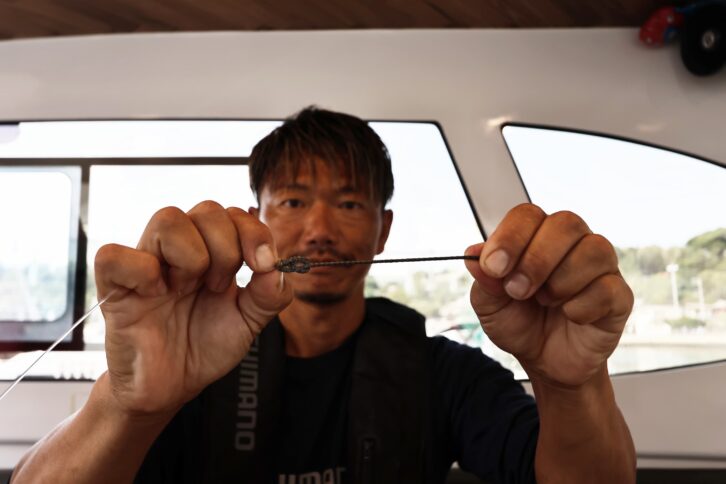
④ Secure the leader with a figure-eight knot at the point where it was threaded through.
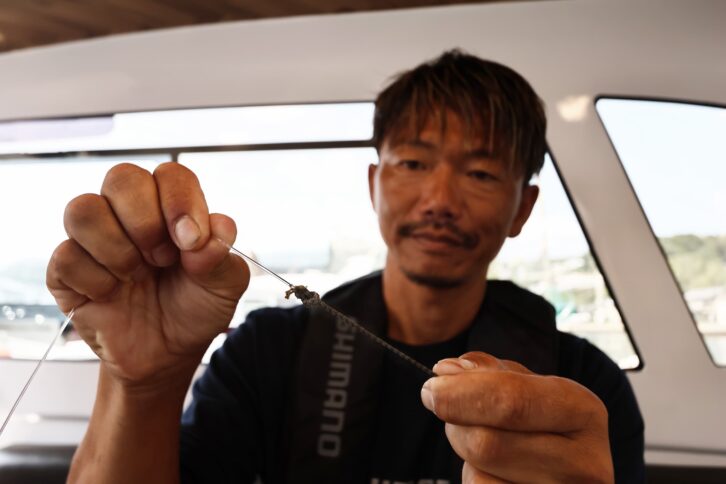
⑤ Since the braided fibers of the Zylon knot can come undone, pull the figure-eight knot as close as possible to the leader side and tighten it.
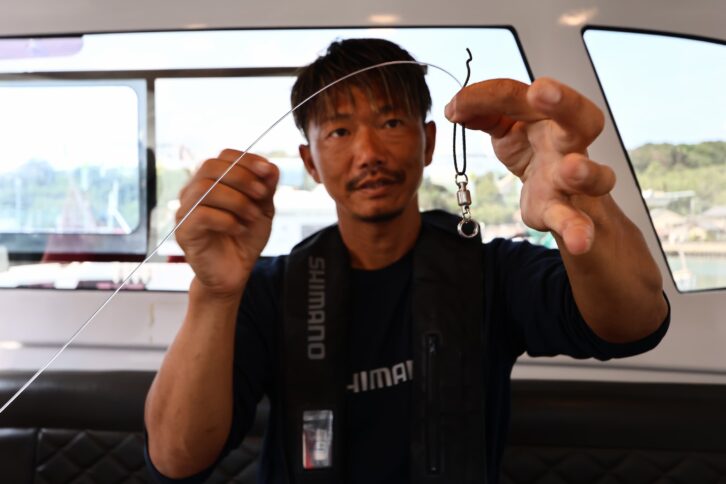
⑥ Pass the tip of the Zylon knot through the swivel and fold it back to the desired length.
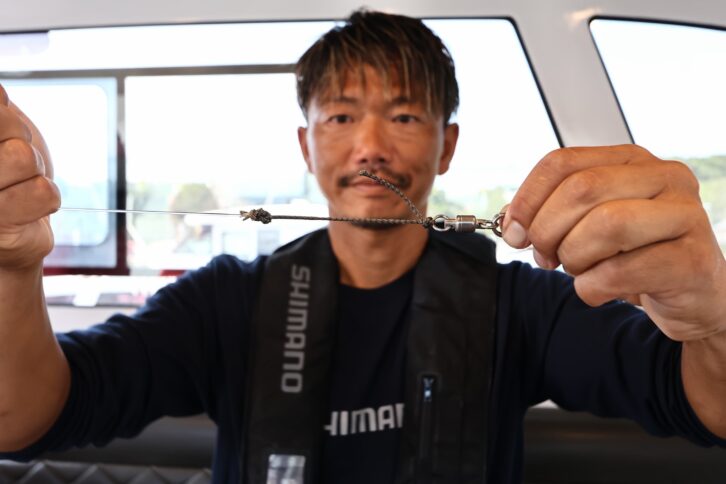
⑦ Tie it with a triple-pass Uni knot. Tighten it firmly so that there are no gaps.
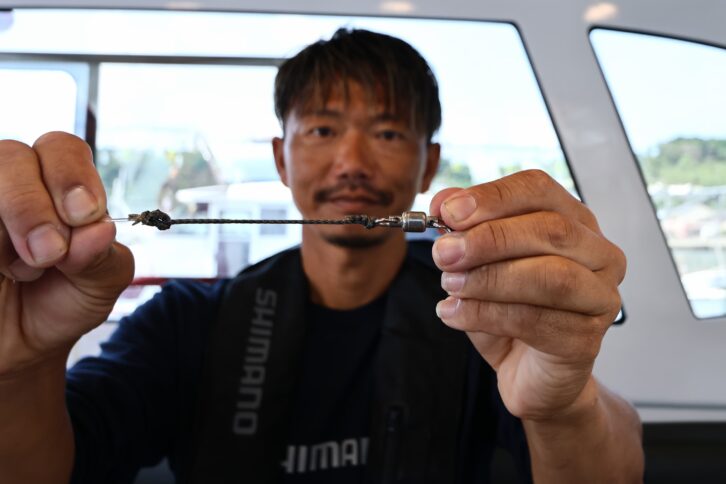
⑧ Cut off the excess Zylon knot near the knot to complete.
[Varivas Ultimate Fighting Leader]
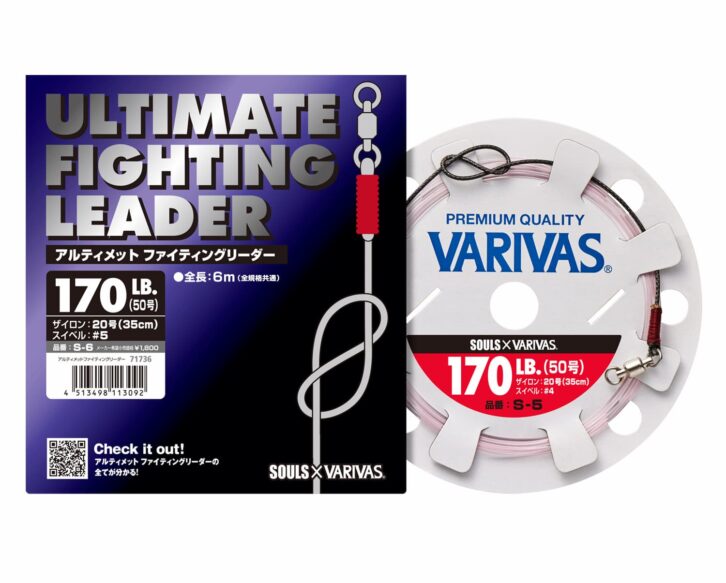
Varivas leaders with pre-tied Zylon knots. Available in different Zylon knot lengths. The SHOOTING MODEL (35-45cm) is designed specifically for shooting at schools of fish, featuring a long Zylon knot for peace of mind even when fish swallow the lure whole or snag it. The MULTI MODEL (10cm) is a medium Zylon design suitable for both shooting at schools and enticing fish. The INVITED MODEL (5cm) is a short model designed specifically for enticing fish, making it difficult for fish to spot and easy to manipulate. The tip is equipped with a strong swivel that is easy to thread onto the spool, and leader strengths range from 105lb to 220lb.
https://www.varivas.co.jp/Product/searchgroup/name/type:/view3:2/id:4863
Select a rod with the strength to lift your target size
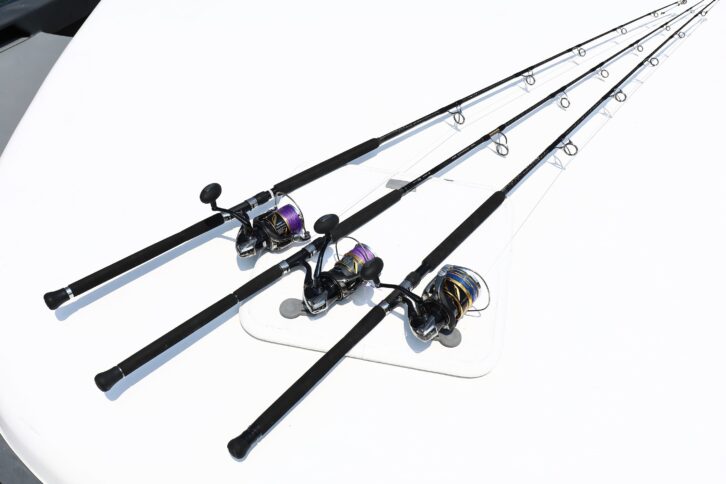
“Rods designed for tuna have evolved daily in recent years, thanks to data gathered from numerous catches. Personally, I prefer strong models that let me fight the fish by standing the rod upright and bending it. By bending the rod and using its rebound to lift the fish, I find it easier to close the distance with the tuna.”
However, it’s also necessary to match the rod to the line used and the target size.
“For schools of 30-50kg tuna, I select the Ocea Plugger Limited or Ocea Plugger Full Throttle in S83H or S88H.”
Both models offer stable casting distance, enabling you to approach fast-moving schools from a distance. The X-Guide Touch Free Titanium ensures the line doesn’t contact the blank, minimizing line tangles and reducing line degradation. They also possess ample power to handle the pull of 50kg-class fish with ease.
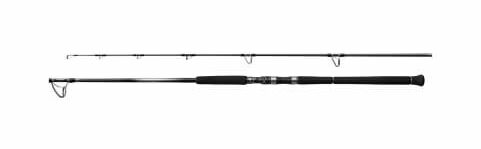
【Shimano Ocea Plugger Limited】
https://fish.shimano.com/ja-JP/product/rod/offshoresalt/casting/a075f000048lh78qaa.html
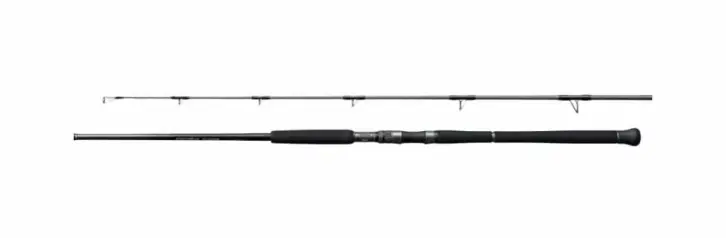
【Shimano Ocea Plugger Full Throttle】
https://fish.shimano.com/ja-JP/product/rod/offshoresalt/casting/a075f00003xhcsuqaa.html
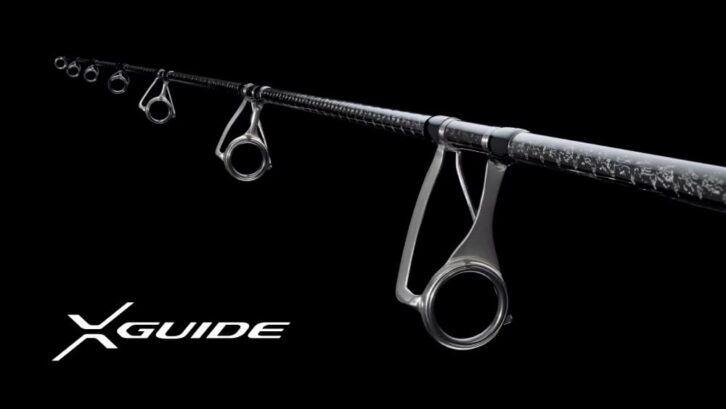
X-Guide Touch Free Titanium prevents line contact with the blank during casting, maximizing distance. This is a Shimano-exclusive guide mechanism.
“For schools weighing 50 to 100 kg, I choose the Ocea Plugger BG FLEX ENERGY S710XH. This model features a responsive tip and excellent handling. It strikes the perfect balance between stiffness and flexibility, delivering excellent casting distance. While stiffer rods struggle to detect subtle strikes from smaller baitfish, this rod’s softer tip allows casting smaller lures. It also handles upright fighting positions. Even when hooked by a large tuna in the 150kg class, it can handle a straight fight.”
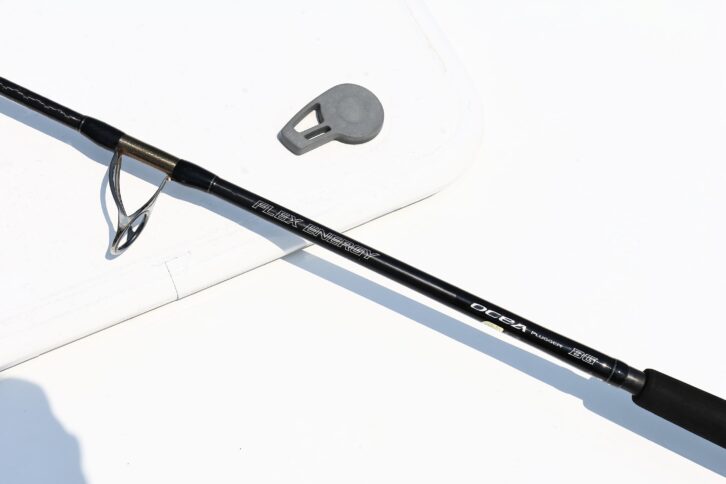
The Ocea Plugger BG series is developed around three distinct concepts. The MONSTER DRIVE, a 3-piece design emphasizing the combined power of distance, strength, and speed. The FLEX ENERGY, offering stable handling and distance while also possessing the tenacity to bend and land fish. And the BLUEFIN TUNA, the strongest series in the Ocea lineup, developed specifically to land 200kg-class bluefin tuna. It employs the Spiral X Core, which delivers high strength against bending, twisting, and crushing, along with the High Power X to further enhance torsional rigidity and control wobble. This high durability enables it to handle the most grueling fights.
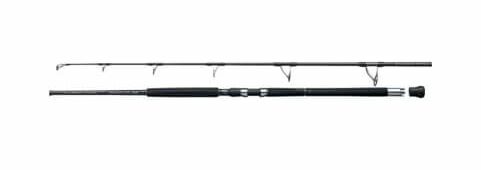
【Shimano Ocea Plugger BG】
https://fish.shimano.com/ja-JP/product/rod/offshoresalt/casting/a075f00002llolkqac.html
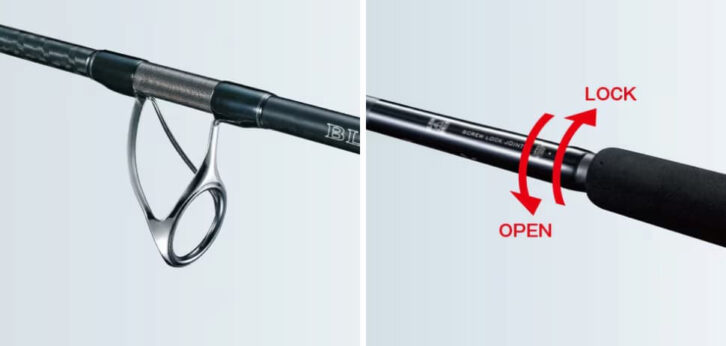
The Ocea Plugger BG features RVSG guides on the butt section to reduce line tangles, minimize release resistance, and lessen line damage. The grip attachment uses a locking mechanism, eliminating concerns about detachment.
“For the 100-150kg class and above, we recommend the OCEA PLUGGER BG BLUEFIN TUNA. Honestly, any large-game rod model can handle a straight fight. However, when fighting by raising the rod to apply more pressure on the fish, you need a model with a solid butt section and power throughout the entire rod. That’s why I select the BLUEFIN TUNA. Specifically, the S73XXH and S70XXXH models.”
The difference between the two models is that the S73XXH has a longer length, making it easier to achieve casting distance. Its greater flex also makes fighting fish easier. However, when facing larger fish, the S73XXH has less lifting power compared to the S70XXXH, requiring slightly more personal effort during pumping. Conversely, the S70XXXH has a shorter length, resulting in slightly less casting distance, but it offers higher lift power. Once bent, the rod’s rebound helps bring the fish to the surface. The choice between them depends on the angler’s preference and physical strength.
“For general anglers and those new to tuna fishing, I recommend the easy-to-handle FLEX ENERGY S710XH and BLUEFIN TUNA S73XXH. The S70XXXH is extremely powerful, so some might find it difficult to handle. Those confident in their strength or with extensive tuna fishing experience will likely prefer the S70XXXH. Personally, I often select the S70XXXH when targeting large fish.”
Preparing the Line, Preparing the Reel
When spooling line onto a reel, applying tension while spooling is fundamental in any type of fishing to prevent line-bite issues on the spool during the fight. However, there’s no need to apply extremely high tension just because you’re targeting tuna. There are other points to note as well.
“Even if you load the spool with extremely high tension, that section won’t experience such high tension during casting and retrieval, so it’s pointless. I wind line onto the spool with about 3kg of tension. And what you must pay attention to while winding is the shape of the line being wound. You need to wind it so that it is perfectly parallel to the spool. This is extremely important to prevent casting problems, and I often see customers who don’t do this. Therefore, it is best to wind the line yourself while checking it. If you have the line wound at a shop, it is better to set the spool on the reel you use and have them wind it so that it is parallel, or to check that it is parallel while they are winding it.”
Spinning reels have their own winding characteristics. When winding the line, it can sometimes wind in a V shape or reverse V shape. This can cause problems such as the line coming out in a bunch when casting. If it does not wind parallel, you need to adjust it by removing or adding washers on the shaft. It is important to understand this tendency and take measures in advance.
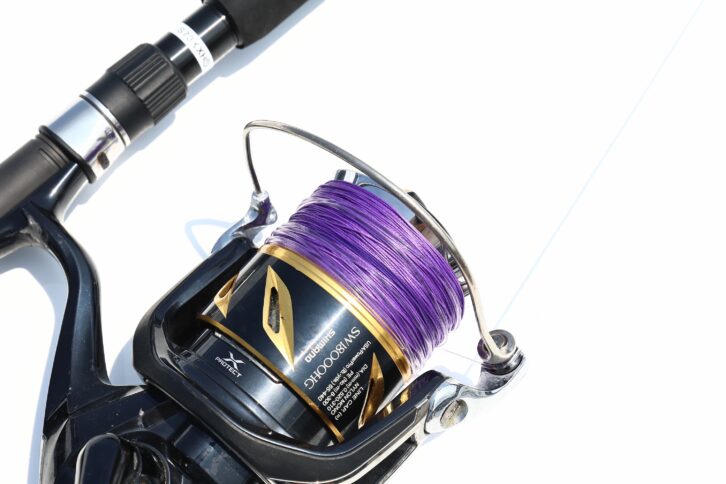
When actually fishing, it is essential to set the drag value accurately in advance for bluefin tuna fishing.
“For bluefin tuna, I set the initial drag on all my tackle to around 8kg. First, I crank the reel’s drag all the way to MAX to see how many kilograms it holds. This checks if the drag mechanism is damaged from previous use. If it holds firmly at MAX, I then back it off to set it at 8kg and prepare.”
He says that if he ever feels any issues with a reel during use, he immediately sends it to Shimano for maintenance. Incidentally, Mr. Tashiro reported no issues whatsoever after landing four consecutive large bluefin tuna using his Stella SW. However, this is precisely because it was handled correctly. Reels that have fought large fish may have internal issues, so it’s wise to send them to the manufacturer for overhaul when not in use.
“A reel in perfect condition gives you mental peace. For that reason too, I think manufacturer maintenance is advisable.”
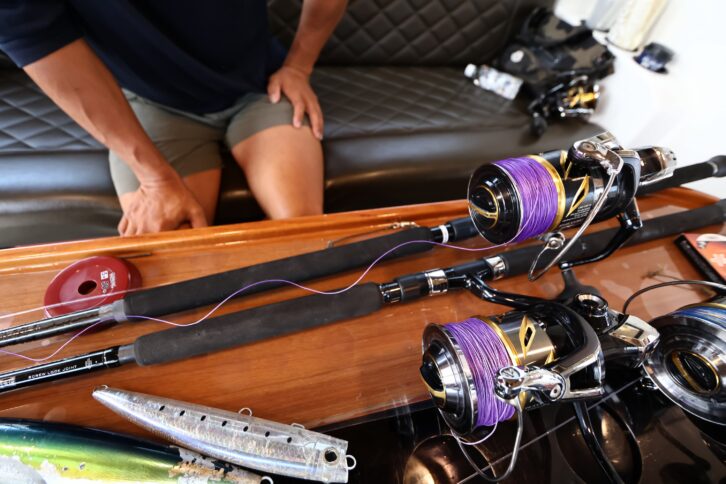
For bluefin tuna fishing, you want everything perfectly prepared each time. Reels and line should be in fresh condition. And drag settings must be properly adjusted beforehand.
Line Selection for Sustained Initial Performance
In bluefin tuna fishing, where you might face a once-in-a-lifetime monster and rarely get multiple chances, it’s obvious that line selection isn’t just about thickness. You need something reliable: strong, stable, trouble-free, and capable of maintaining its initial performance.
The line Mr. Tashiro selects for bluefin tuna is the “Avani Casting PE SMP Hiramasa Tune X8,” developed after extensive testing with Varivas. As its name “Hiramasa” suggests, it was originally developed for yellowtail amberjack casting, but its high performance makes it his main line for tuna fishing too. He also mentions using the “Shimano Ocea 17+ PE” in 2025.
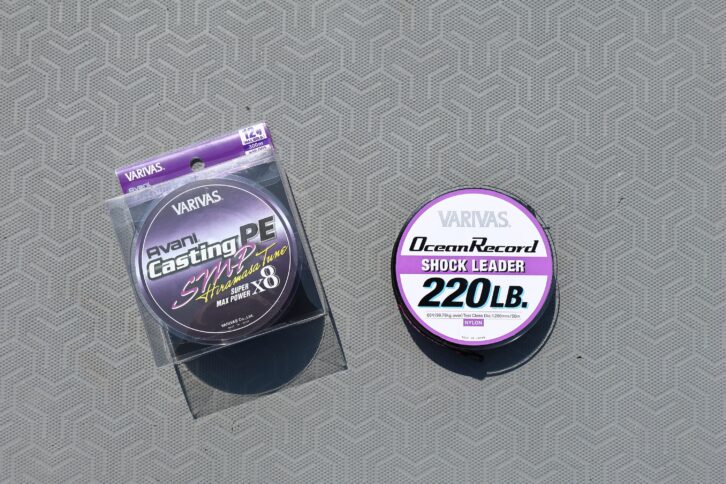
【Avani Casting PE SMP Hiramasa Tune X8】
https://www.varivas.co.jp/Product/searchgroup/id:5003
【Varivas Ocean Record Shock Leader】
https://www.varivas.co.jp/Product/searchgroup/id:4665
“SMP Hiramasa Tune uses the same base filament as standard casting PE SMP, but features a double coating process. It incorporates VARIVAS’s proprietary resin coating and unique Smooth Tech coating. The smoother surface improves guide passage and reduces issues like wind knots. The double coating also makes it more resistant to abrasion than standard SMP. Additionally, it has more stiffness than the standard SMP, making it easier to build a line system.”
Line coatings inevitably wear off with use. The standard “Avani Casting PE SMP” is a high-performance PE line with excellent abrasion resistance and durability, achieved by applying a proprietary coating to the SUPER MAX POWER base filament. The SMP Hiramasa Tune further incorporates Smooth Tech Coating, enhancing surface smoothness and resistance to damage from prolonged abrasion. It also minimizes fraying and color fading. This makes it an ideal line for extended tuna fights. Its performance has been proven through numerous catches by Mr. Tashiro.
For leaders, he uses the “VARIVAS Ocean Record Shock Leader.” This leader was also supervised by Mr. Tashiro. Its selection is based on its strength and moderate stretch. While soft, stretchy nylon leaders absorb the tuna’s powerful runs during the fight, protecting the knot and the angler, they reduce lure maneuverability. Mr. Tashiro prefers the Ocean Record Shock Leader for its “moderate stretch” without excessive flexibility. Its moderate stiffness also makes the system easier to assemble and ensures smooth guide passage. Its performance explains its popularity among bluefin tuna anglers.
“I tie the line system with an FG knot as usual. I don’t add extra braids or half hitches specifically for tuna.”
The braiding consists of about 15 turns, counting each side as one turn. He wraps the line around his hand while braiding, applying tension to ensure it’s tightly packed. After braiding, he tightens the braided section under high load. Then, he wraps the PE main line around his foot, applies tension, and makes half hitches to cover both the PE main line and the leader. He makes four half hitches, counting each up-and-down pass as one turn. For the half hitches covering only the PE main line, he makes five passes, counting each up-and-down pass as one turn. Finally, complete the knot by performing a double-pass end knot on the half hitch’s tail twice. With this knot, Mr. Tashiro has achieved proven results with tuna, yellowtail amberjack, and many other species. The tying method is simple, and a key aspect of the Tashiro style is immediately retying the knot if any concerning areas are found in the line during inspection. For tips on braiding and tightening, refer to the video below.
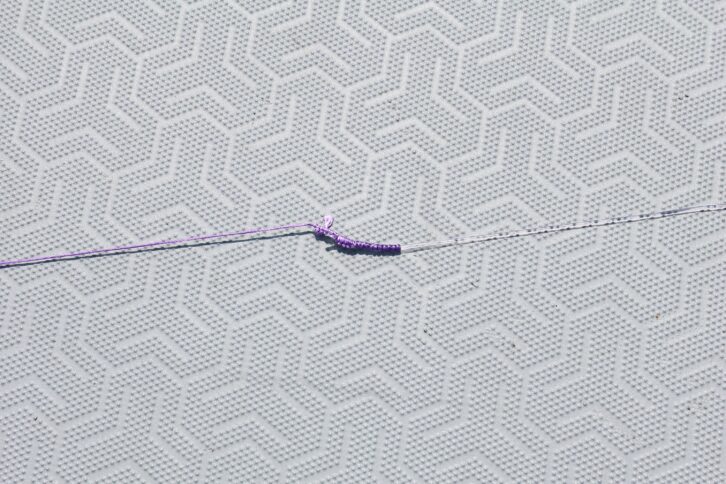
Mr. Tashiro’s simple FG knot. When braiding, apply firm tension and tighten each pass thoroughly. Careful braiding achieves high knot strength. During fishing, if any part of the knot feels questionable, re-tie it immediately.
[Tashiro-style FG Knot Tutorial]
Incidentally, when asked about hardware like ball bearing swivels and split rings, he said, “I don’t have any particular brand preference. I often use whatever customers leave behind on the boat (laughs). That said, the products customers bring—like CBONE, Carpenter, or SOULS—tend to be strong and high-quality. Choosing from those brands is a safe bet.” It’s wise to select products from trusted manufacturers with proven track records.
Lure Selection: Don’t Be Misled by Bait Size
Regarding lure selection, what is Mr. Tashiro’s approach?
“The primary focus is matching the size the tuna are feeding on at that moment. However, when targeting small bait like whitebait or sardines, we use powerful tackle, so matching the lure size isn’t feasible. Tackle selection starts with choosing a rod, reel, and line suited to the target tuna size. Then, you select lures that can be cast effectively and achieve good distance with that tackle. This limits your lure choices, but you then search for tuna reacting to those specific lures. Incidentally, based on my experience and observing customer hits, poppers often get strong reactions. Regarding lure size for the tackle used, I find one size smaller works better than oversized lures. When targeting 30cm saury, a 25cm lure often gets better response than a 30cm lure.
Mr. Tashiro typically uses various Shimano lures from large to medium sizes, but the Head Dip 200F stands out as a versatile lure. It lacks length but has volume, adapting to any bait pattern. Even in size 12, it achieves good distance and is essential for tuna fishing. Other frequently used lures include the Full Throttle 190F, the special-order Ocea Pencil Hirahira 190F & 220F, the Bubble Dip 220F, the Bomb Dip 170F, and the Bomb Throttle 200F. Furthermore, when fish are feeding on bonito bait, he never hesitates to choose larger plug sizes.
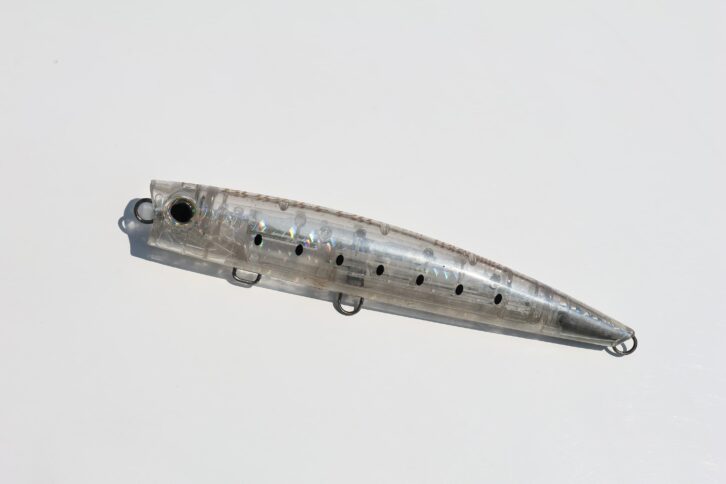
Popper appeal proves effective in many situations. Pictured: Bubble Dip 220F Flash Boost. Other poppers like the Bomb Dip 170F and Bomb Throttle 200F also perform well.
【Shimano Bubble Dip 220F Flash Boost】
https://fish.shimano.com/ja-JP/product/lure/offshorecasting/topwater/a155f00000c5czyqav.html
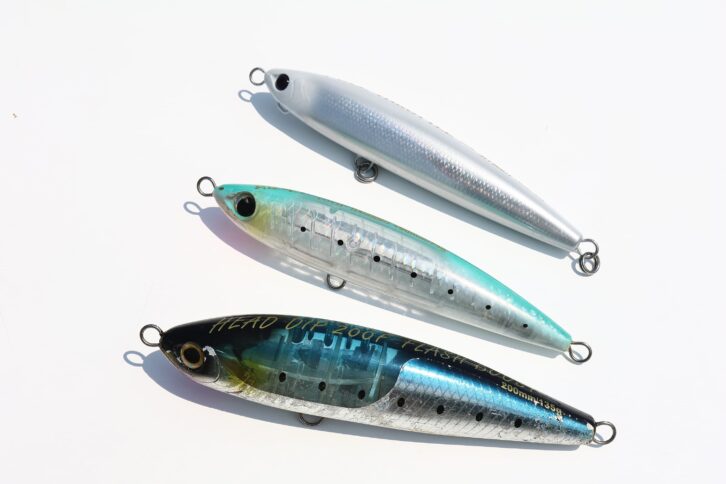
The photo shows topwater pencils often selected by Mr. Tashiro. From bottom: Head Dip 200, Ocea Pencil Special Order Hirai 190F, Full Throttle 190F.
【Shimano Head Dip 200F Flash Boost】
https://fish.shimano.com/ja-JP/product/lure/offshorecasting/topwater/a155f00000c5d0oqav_p.html
【Shimano Ocea Pencil Special Edition Hirai Masahiro 190F Flash Boost】
https://fish.shimano.com/ja-JP/product/lure/offshorecasting/topwater/a155f00000cbga6qaf.html
【Full Throttle 190F Flash Boost】
https://fish.shimano.com/ja-JP/product/lure/offshorecasting/topwater/a155f00000c6dcoqav.html
“When selecting lures, it’s more important to choose one you can cast and control with your tackle than to match the size of the bait being preyed upon. Even if you match the bait size, you won’t get bites if you can’t get the lure into the right spot. Getting it into the right spot is more important.”
When targeting bluefin tuna, you should explore using both feeding french attacks and enticement tactics depending on the situation. For feeding french attacks, prioritize quickly casting the lure into the spot where you got a reaction, using tackle with power matched to the size of the tuna.
Bluefin tuna casting changes between targeting feeding frenzies and enticing them out based on baitfish density. For feeding frenzies, precise cast control is vital. For enticing them out, you might search while chasing the school or drift the boat like when casting for yellowtail amberjack. Incidentally, bluefin tuna fishing often follows a pattern where you locate a school, and suddenly the real action begins. Therefore, developing the casting accuracy to place your lure precisely where you aim with tuna tackle is extremely important, making casting practice essential. At Sunrise, we sometimes use periods when no schools are found to practice casting. Practicing this way ensures you can respond when the real action suddenly arrives.”
Bluefin tuna fishing requires specialized tackle with a strong rod and thick line. For beginners or those using this tackle for the first time, it’s advisable to practice casting before departure. Confirm which lure sizes you can properly swing through and how to achieve maximum casting distance.
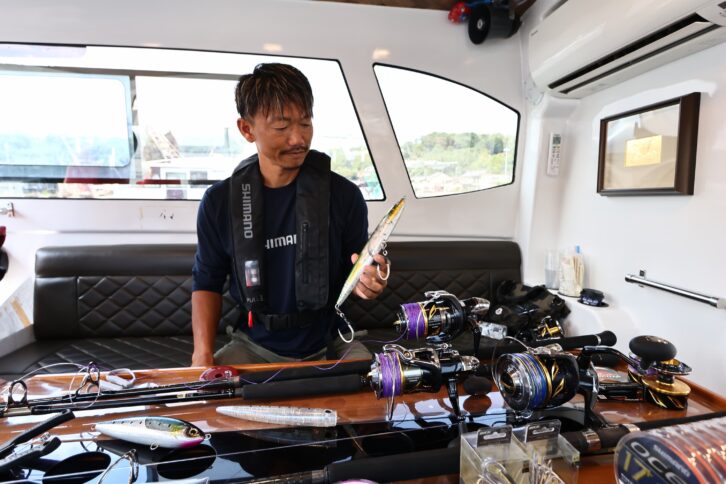
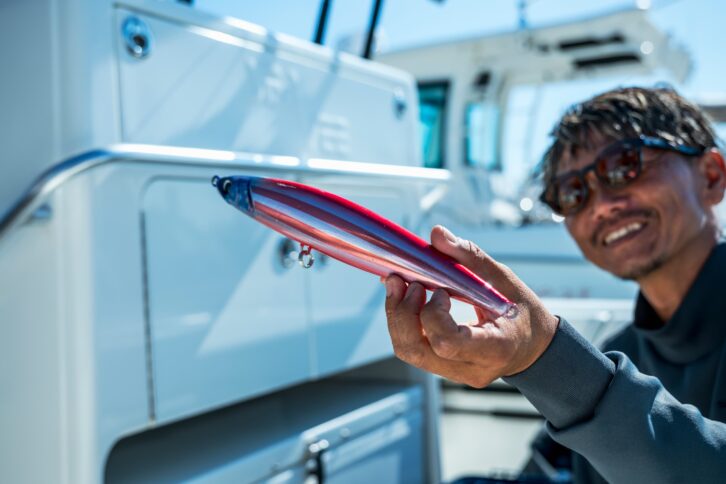
The lure Mr. Tashiro is holding is a large plug currently being tested. Its length is a whopping 30cm.
Treble hooks are the main choice
“I don’t have any particular ‘must-use’ hook preferences. I use various models as long as they are thick-shanked and robust. Specifically, I use Gamakatsu’s Treble 24 GT Recorder, BKK’s Raptor-Z, and Owner’s Stinger Triple 66, among others.”
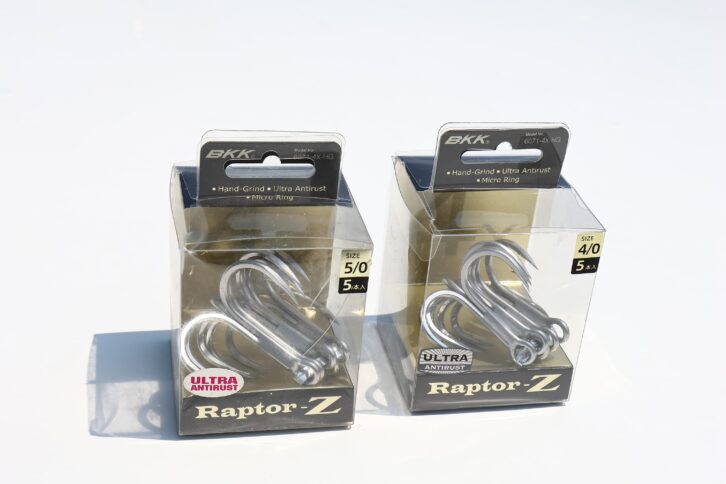
When asked whether to use treble hooks or single hooks, he stated he almost always uses treble hooks. When targeting bluefin tuna overseas, regulations may require single hooks in certain areas, so he uses singles in those cases.
“I use treble hooks not just for easier hooking, but because I believe they improve the lure’s action. I’ve always worked lures with trebles and am accustomed to their movement. With singles, I feel I have to adjust them to get the desired action. Also, having fewer points reduces the stress of worrying, ‘Maybe it won’t hook.’”
Approaches Based on Bluefin Tuna Conditions
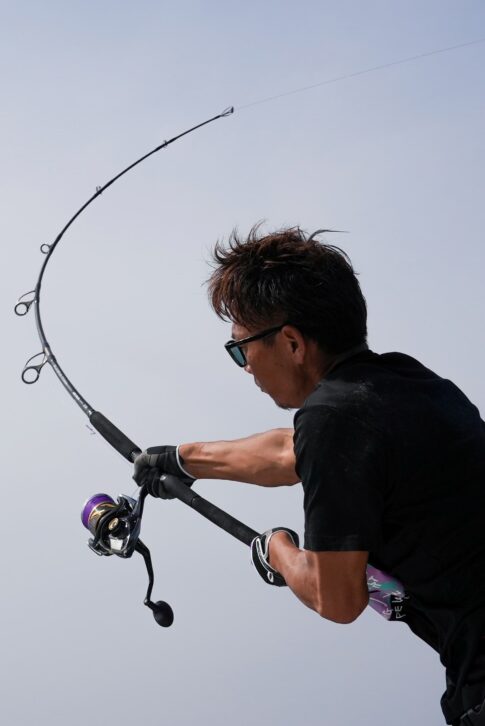
Targeting schools requires quickly assessing the situation and ensuring the lure lands precisely where intended. Prepare beforehand to ensure your tackle allows for precise casting. Photo courtesy: Varivas
As mentioned earlier, the basic patterns for targeting bluefin tuna via casting are targeting the surface action and enticing them out. Alongside Mr. Tashiro’s approach, I also asked about what he has his clients do when he’s steering the boat as captain.
First, the approach for targeting surface action changes depending on the density of the school.
“Spotty schools are a bit tricky to target, so I have fellow anglers coordinate their casting timing. With dense schools, if you get a bite right in the middle, your line can get tangled in the school. It’s best to cast ahead of where the school is moving, but if you cast right into the center of the leading edge, the tuna school might move in after your lure hits the water. Casting deeper into the school also risks your line getting tangled in the school if you get a hit. Therefore, I believe dropping the lure just ahead of the leading edge of the school is best.”
When schools occasionally boil up at the tidal line, we target them using a lure-and-wait approach.
“For lure-and-wait, cast the lure, let it sit for about 5 seconds, then repeat a single action a few times. If nothing happens after several attempts, retrieve and recast. At Sunrise, we also fish by locating tuna schools with sonar and casting lures ahead of their path. Here too, we ask passengers to coordinate their casting timing. By synchronizing, it mimics a flying fish school dropping down, and once one hits, multiple hits often follow. For this approach, poppers, which are easily noticed, have proven highly effective. If no bite occurs within 10 seconds of adding action, retrieve, move the boat to cast toward the school’s leading edge again, and try again. That’s how we tackle it. I personally enjoy this fishing style. The tuna swim slowly, avoiding competition with other boats, and there are fewer line breaks caused by fish rubbing against each other in the school.
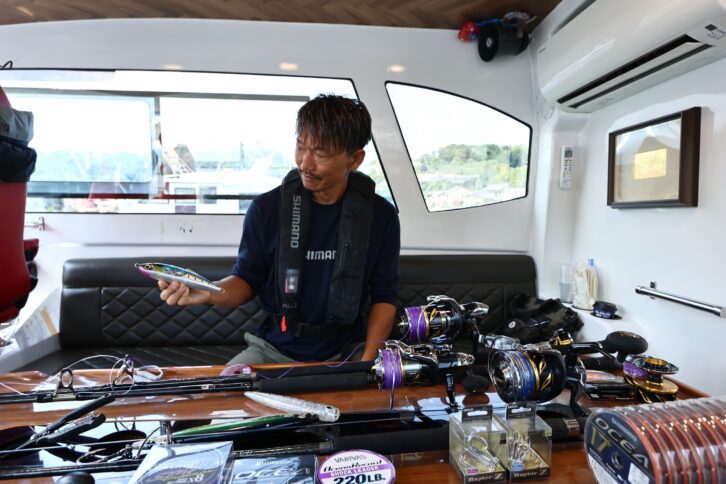
Both pencils and poppers are used for enticing the fish. Mr. Tashiro is holding the highly effective Head Dip 200F, known as a versatile lure.
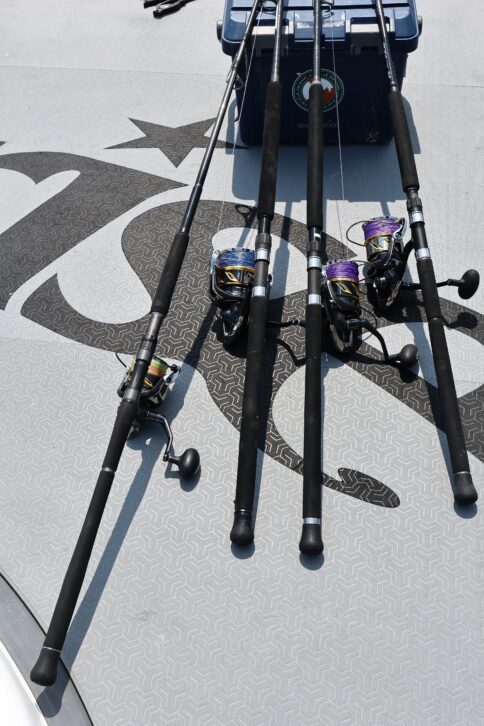
In tuna fishing, you won’t know the size of the tuna or the conditions until you reach the migration area. That’s why preparing multiple tackle sets is essential. Keep every setup ready to cast at a moment’s notice. If you’re selecting just one tackle, gather detailed information from the captain beforehand to tailor your approach.
Handling the Hit and Fighting Techniques
A massive bluefin tuna explodes out of the water, splashing droplets as it lunges at your cast lure. When your own lure gets hit, you might panic. However, staying calm is crucial.
“Right after the bite, the bluefin may feel something unusual in its mouth and shake its head. Maintaining solid line tension here is vital to prevent the lure from coming off. Keep the rod tip tucked under your arm and continue reeling steadily to avoid slack. At this stage, don’t think about lifting the rod. Once the tuna decides the foreign object (lure) won’t come off, it will surge forward. This completes the hookset. No excessive hookset is needed. This run can manifest in various ways: a sudden long dash, or a short run followed by swimming back towards you. Regardless, maintaining line tension is paramount. When the run weakens, maintain tension while inserting the rod into the gimbal. If the drag is set too high (e.g., 15kg), you won’t be able to insert the rod into the gimbal. Keep the drag at its initial setting of 8kg.
First, make the fish anxious. While tuna swim fast, they don’t typically swim quickly except when hunting prey. It’s crucial to make them swim fast, depleting their stamina.
“Keep the drag at 8kg, but depending on how the line runs or if nearby anglers get hits, you might need to tighten the drag slightly. However, don’t tighten it excessively. Also, have water ready to cool the reel by pouring it over it. Staying calm and handling the situation steadily is vital.”
Then, when the fish stops moving, tighten the drag and switch to reeling.
“If the line angle is diagonal, tighten the drag to apply pressure while pumping to reel in, matching the fish’s movements. If the line is vertical and heading straight down, tightening the drag too much will cause the rod to bend sharply downward, forcing you into a strenuous, hunched-over position. If possible, coordinate with the captain to maneuver the boat so the line becomes diagonal. Otherwise, return the rod to the underarm position for a straight fight stance before tightening the drag. Gradually tightening the drag in sync with the fish’s movements is best. During the fight, I always consciously keep the rod upright to apply more pressure, but if the upright position becomes too strenuous, I switch to a straight hold. Repeating these actions allows me to retrieve line and close the distance.”
Holding the rod upright and leveraging its elasticity to apply more pressure results in a significantly faster fight.
“During a gimbal fight, it’s easier to hold the rod by the upper part of the fore grip. Position the gimbal around your thigh so you can easily grasp the tip of the fore grip when holding the rod upright.”
The drag setting should ultimately be increased to around 20kg for a 150-200kg class fish. Use hand drag in conjunction. Knowing beforehand how much to turn the knob to adjust drag from an initial 8kg to a maximum of 20kg allows you to set the proper drag without panicking.
“The last 30 meters are hell. You clear this layer with your last ounce of strength. If you use too much energy early on, you’ll lose grip strength, your back will hurt, and you’ll mentally break down. To prepare for these final 30 meters, you need to conserve about 70% of your stamina up to this point. Shallow water lets you reel in without expending much energy, but deep water with strong currents will drain your strength. Even so, you must conserve energy for those final 30 meters. Before reaching the tuna school, keep your body flexible and loosened up. During the fight, be mindful of which muscles you’re using and their fatigue levels, and use them selectively. Once a muscle gives out, it won’t recover immediately. You truly realize tuna fishing is a sport.”
When you can reel, reel as much as possible, gradually closing the distance. The tuna will start circling within sight, and you’ll gradually bring it closer while avoiding the boat’s hull. At this point, with the drag set at 20kg, the line should just barely feed out with a ‘zzz, zzz’ sound as it circles outside the arc. Then, as it circles toward you, slowly retrieve the line.
“In a straight fight, tighten the drag to maximum when you spot the tuna. When reeling it up near the surface and maneuvering around the tuna while avoiding the hull, be careful—if the line hits the boat, it risks breaking or damaging the guides. The best approach is to turn the guides away from the boat and endure. Also, if the captain follows too closely with the boat during this exchange, it creates a pulling force on the tuna, allowing it to recover. The angler must endure and reel it in. Once it reaches the surface, let it take several breaths of air before landing it.”
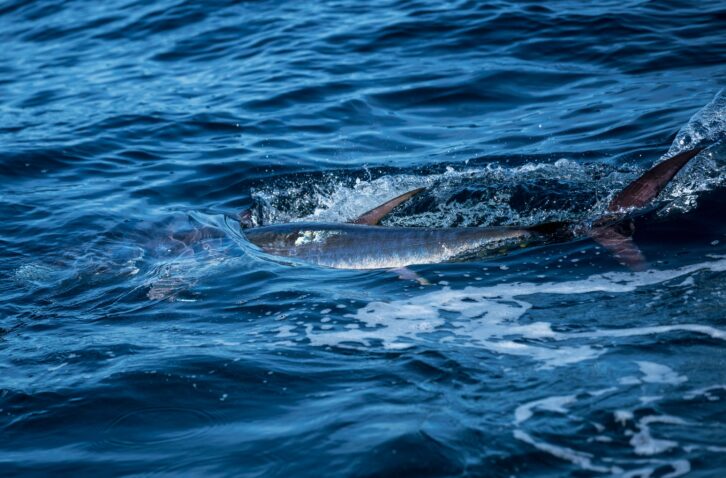
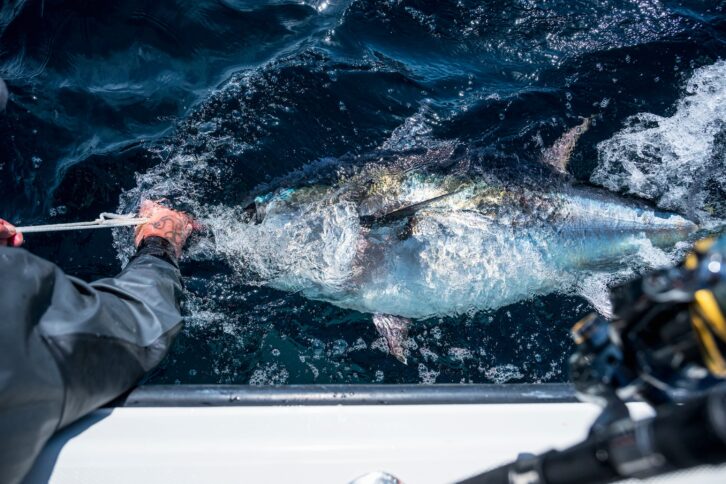
Finally, float it and let it take several breaths of air to calm it down. Once it does, have the captain or crew take the leader for landing. For release, quickly remove the lure and revive it by pulling it alongside the boat. Photo taken in Boston, 2025. Photo courtesy of Shimano.
Incidentally, it’s said that releasing tuna is easier once they’re sufficiently fatigued. While they may surface quickly, be cautious as surfacing too soon can leave them energetic and violent.
“Even when fatigued, tuna will start swimming again within about five minutes if you slowly tow them alongside the boat. For landing or release, it’s safer to ensure they’re thoroughly exhausted first. By the way, I’ve become quite accustomed to releasing large tuna from my own boat over the years. Over the past few years, both anglers and captains have gained a lot of experience. We’ve also gathered various data on tackle and release equipment. I wonder what new gear and techniques will emerge next. It’s exciting.”
Essential Items Beyond Tackle
When fishing for tuna, there are items needed besides tackle. One item Mr. Tashiro recommends preparing is gloves.
“I think high-grip gloves are essential. The grip helps reduce fatigue in your grip strength. By the end of the fight, you’re at your physical limit, and the rod feels like it might slip from your hands, but the gloves help you hold on. I use Shimano or Varivas gloves, and I recommend both.”
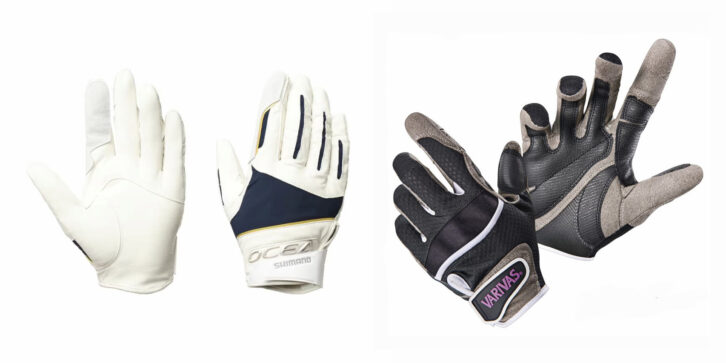
【OCEA Casting Pro Gloves】
【Varivas Fighting Gloves MAX】
https://www.varivas.co.jp/Product/searchgroup/id:5078
A gimbal is also essential. When fighting large fish over 150kg with the rod upright, the best setup involves lowering the gimbal position. A larger model that securely rests against your thigh, even when your legs are spread wide, is ideal.
Incidentally, Mr. Tashiro is known for fishing barefoot and handling the boat. What about his footwear when targeting tuna?
“I haven’t always worn shoes before, but I plan to start now. During the fight with a large tuna, constant downward tension is applied, so even my feet get sore. Wearing something with cushioning reduces the strain. I feel it’s important for tuna fishing.”
Furthermore, polarized sunglasses are also a necessary item. They should be worn not only to see the tuna’s movements but also for safety reasons.
“Tuna can break rods. Also, when everyone gets excited seeing a school of tuna, you need to cast amidst that excitement. Wearing polarized sunglasses provides peace of mind. Furthermore, considering the physical drain of long fights, especially in summer, choosing breathable clothing is crucial. Avoid dark-colored gear that absorbs light. Clothing selection alone makes a huge difference in how much energy you expend.”
What a captain does and considers during bluefin tuna fishing.
“Your catch rate in tuna fishing changes dramatically based on how well you coordinate with the captain. When hooked on a large tuna, anglers get mentally drained. Anxiety creeps in: ‘Will my stamina hold? Is my line holding up?’ I’m always thinking about how to support them as the captain during these moments. I communicate the tuna’s swimming direction, the timing to reel in, and when to hold steady. There are also times when I deliberately choose not to intervene, and I explain the reasoning behind that too. I believe working together with the captain provides crucial mental support. Drawing from years of experience learning efficient methods for landing big fish, I fully utilize that knowledge to advise anglers and maneuver the boat, aiming to secure the catch as quickly as possible.
Incidentally, he mentioned that sometimes, after assessing the size of a leaping big tuna and observing the angler, he thinks, “Are you really ready to cast your lure at that fish?” While everyone has the right to target it, there are times when he feels, “That might be too much.” Sometimes, judging by size, it’s necessary to choose a fish you can actually land.
As a result, some anglers exhaust themselves and give up. However, fellow anglers on the boat often don’t switch out to conserve their own energy, so on the Sunrise, Tashiro-san frequently ends up taking over the fight.
“We need to land the fish quickly to guide other anglers to the next school. That’s why I aim for short fights. While fighting a fish is valuable experience, it’s still tough. That’s why I sometimes wish anglers would choose sizes they can actually land.”
Tackling tuna requires serious commitment. Extra-large specimens, weighing many times your own body weight, are no easy foes. That’s precisely why you need to be in peak physical condition and have solid tackle.
“I believe anglers who aren’t fundamentally prepared for the fish they target have no right to pursue them. Tuna targeted by casting are top-tier in size, pull, speed, and value. To challenge such a supreme creature, the angler must be near-perfect to win. Perfect gear is essential, of course, but so are physical and mental strength. This isn’t an opponent to face with a day-trip mindset. Before the tuna even appears, you need to prepare your body through stretching and such. Also, ask the captain any questions you have beforehand to resolve them. Having a flawless line system and knots is a given. Setting the drag properly is also a must. Even with everything prepared and giving your absolute best, this is a fish that can still defeat you.”
Moreover, bluefin tuna fishing isn’t about landing multiple fish per day. Often, someone on the boat hooks one, and the rest watch. Yet, even that becomes a valuable experience. It’s a chance to learn much about fighting techniques and tuna movements.
Mr. Tashiro, who has accumulated extensive experience with bluefin tuna, has achieved results through countless trials and errors. That’s precisely why he feels targeting tuna is “no light endeavor.”
“On social media, it looks easy, but only a few can land them cleanly. Fighting bluefin is grueling. That’s why meticulous preparation is essential. Personally, when fishing for bluefin, I’m always conscious of ‘how far I can push myself.’ I strive to show the next generation fishing from my perspective and pursue stylish techniques, but I don’t expect to look perfect when targeting bluefin. I just show the fishing I’ve done so far. That’s the nature of this target.”
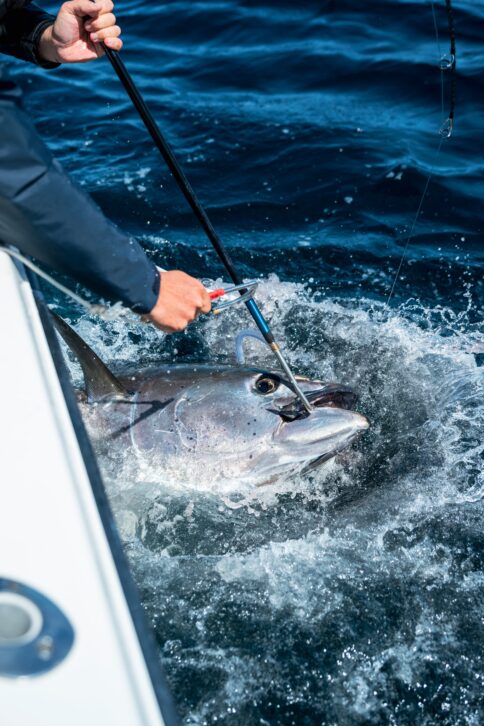
Boston, 2025. Photo courtesy of Shimano
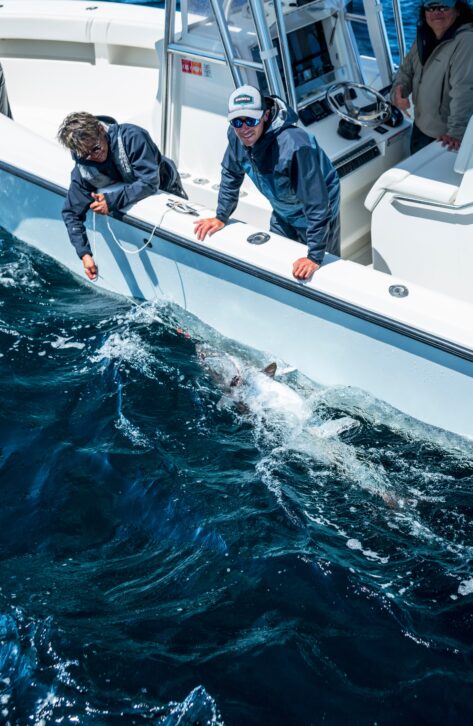
Boston, 2025. Photo courtesy of Shimano


関連記事
-

If only I had the ideal middle layer. Rain would be a winter coat!
-

The key to success is Tail Laba x Strong Wave Motion of Worm x Arrangement
-

Cherry Trout Jigging off Esan, Hokkaido Using different line systems and jigs is the key to success!
-

Don’t miss the short bite of slack-jawed bluefish, It does not miss the short bite of the slack-jawed bluefish, and once hooked, it holds the fish firmly! Single Hook Seigi Futoji No. 20, No. 23, No. 25
-

Reeling in fishing line without damaging it Uoya x Studio Ocean Mark “Thread Winding Factory・ITOMAKI KOUJYOU” NEW Model for 2023
-

Casting rod for catching large fish on expeditions DAIWA [SALTIGA C] EXPEDITION
-

Boat sea bass Big bait game Lineup includes models for
-

Cultiva Hooks in 2025 Serious about large fish!
-

Finally completed after 2 years of development to make it compatible with big game! Shimano / Screwdrive 180F/180F Flash Boost
-

Duel has come out with a leader that is invisible to fish! Its name is “Pink Fluoro Invisible to Fish”!
-

Sunline’s top PE line! Saltimate AMAZER ⅹ8, ⅹ4
-

The rod is bent firmly. You can enjoy the fight! Tail walk rod for slow pitch jerking
-

Inheriting the technology of the top-of-the-range model The long-awaited ‘Outrage SJ’ series for fans
-

Blade jigging rods are now available for full-scale jigging in early fall! Shimano Grappler Type Blade
-

Strong performance this season! Bonito Casting Explained by Takashi Kamiyashiki! Tackle, fishing method, and fighting method
-
Fun with the popular lure Big Bandit! Explained by Takashi Kamiyashiki! Tokyo Bay Big Bait Seabass Game
-

If you want to target bluefin tuna by jigging Recommended Reels STUDIO OCEAN MARK NO LIMITS BLUE HEAVEN 100Lo, 80Lo
-

A Man Who Loves Giant Trevally, and Is Loved by Giant Trevally Kozo Okubo’s Passion for GT
-

Ranbu for big sea bream Musou for quick hooking
-

Only a manufacturing brand can do it! Designing bait-only blanks from scratch