[The Expert's Secrets to Bluefin Tuna]
The Undisputed Pioneer of Tuna Game Fishing
Ichiro Sato
on Bluefin Tuna Casting
The ultimate target, bluefin tuna, is now recognized as a lure target by offshore anglers nationwide. Yet there was a time when catching large bluefin tuna on lures was considered impossible. Yet, there were men who persisted with fierce determination. At the forefront of this movement, establishing the style and spreading it nationwide, was the universally acknowledged pioneer of tuna fishing: Mr. Ichiro Sato. Even amidst the ever-evolving landscape of tuna fishing today, he continues to lead the scene, driving new tackle development and proposing innovative tactics. We asked this top runner to share his insights on the past and present of bluefin tuna casting.
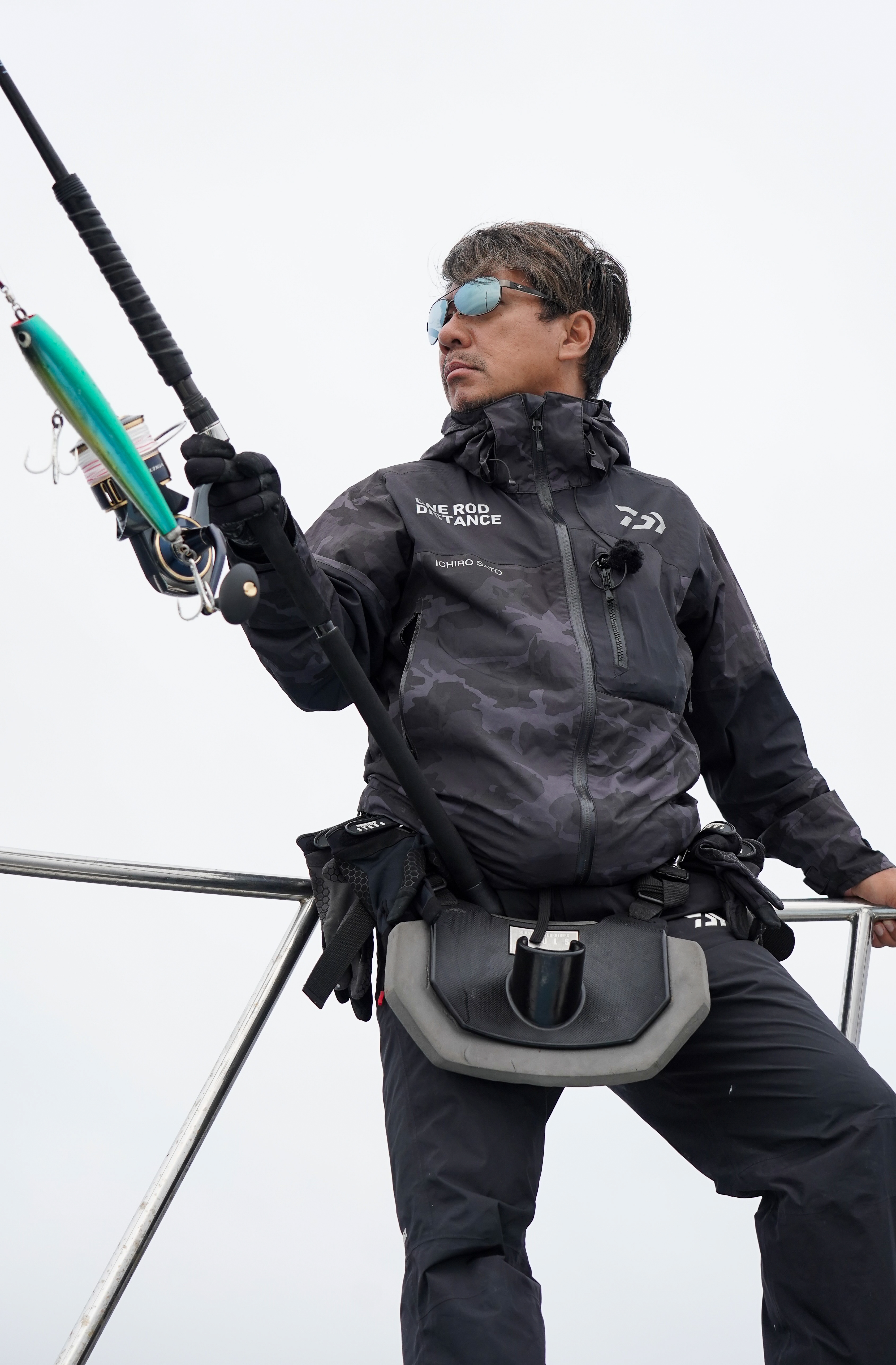
Photo courtesy: DAIWA
INDEX
- The Dawn of Tuna Casting Game
- For Sato, it’s not about the size of the tuna
- Rods and Selections for Stylish Fishing
- Without durability, you can’t fight. The significantly changed 25SALTIGA
- High-durability line is essential for tuna fishing
- The “Fighting Leader” was born with the goal of achieving 100% connection.
- Spacer System and Spare Spool
- SOULS BB Max Power Swivel – No need to tie knots at the fishing spot
- Hook Selection & Favorite Rings
- Lures and Selection Developed for Targeting Tuna
- How do you probe for fish during actual fishing, and how do you handle the fight?
- For Anglers Challenging Bluefin Tuna
Japan’s Bluefin Tuna Fishing Season from April 2025 to the End of March 2026
For recreational bluefin tuna fishing, monthly catch quotas are set from April 2025 through March 2026. The Fisheries Agency stipulates an annual total of 60 tons, with a monthly limit of 5 tons (3 tons from September onward). This quota adjusts if the previous month’s catch exceeds the limit. The new quota period typically begins on April 1st each year. Anglers must report any caught fish. Fish under 30kg are prohibited year-round. For fish over 30kg, the limit is one fish per person per month, and reports must be submitted within one day of landing.
The quota starts at the beginning of each month. If the catch is likely to exceed the quota, bluefin tuna fishing is prohibited. Given this background, the quota is often reached within the first few days of the month, depending on the season. To allow more people to enjoy fishing, some boats encourage catch-and-release. Release should be done in consultation with the captain, who is experienced with release, and fellow anglers on the boat.
Furthermore, fishing for tuna, which are vastly larger than humans, carries risks of accidents during the fight or landing, and potential damage to equipment from unexpected use. Actual injuries and equipment issues are reported. Recognize that fishing is undertaken at your own risk, and enjoy it while ensuring adequate safety. For tuna fishing, approach it with solid knowledge and the physical stamina required to handle large fish.
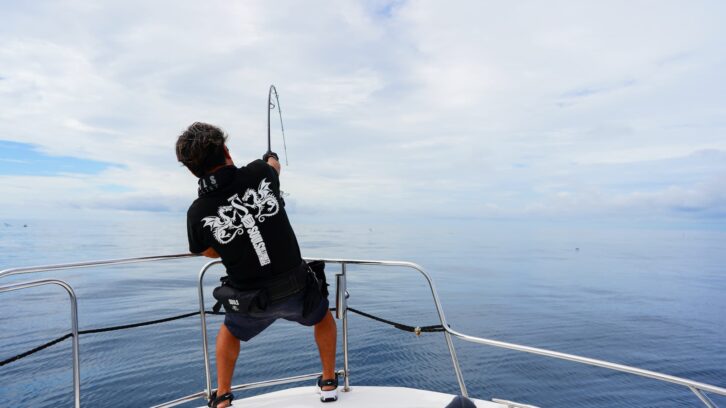
Photo courtesy: DAIWA
The Dawn of Tuna Casting Game
The existence of modern casting techniques targeting bluefin tuna stems from a long history of exploration by challengers. The pioneer who established the style and continues to lead the tuna game fishing world today is Mr. Ichiro Sato. During the dawn of offshore lure fishing, targeting large fish with lures in Japanese offshore waters was pioneered by anglers who established casting for giant trevally, jigging for yellowtail amberjack and greater amberjack, and fishing for bigeye tuna. At that time, it was said that large bluefin tuna couldn’t be caught on lures, and they only became a target later. Before bluefin tuna lure fishing began, bluefin tuna were highly valued fish for fishermen and were seen as fish caught by fishermen. Targeting them recreationally, and especially with lures, was thought to be difficult. It was in this environment that Mr. Sato started targeting tuna with his friends. He says it was 32 years ago. This was an era before the internet was commonplace, when fishing information could only be obtained from magazines or television.
“It was around the time offshore big-game fishing started getting buzz in magazines. But even if you wanted to try that kind of fishing, there was little information, no opportunities, and no one to turn to. So, when I thought about what large fish might be near my home in Aomori Prefecture, bluefin tuna came to mind. But everyone around me said it couldn’t be caught. But hearing that opinion only fueled my fire more. Amidst this, I heard rumors of them in Mutsu Bay and went to target them. It’s laughable now, but I was jigging, and after catching 20 mackerel, I’d get a hit from a yellowfin of the same size. It was definitely tuna, but not the one I wanted. So I researched further and learned that Kyuroku Island had incredible tuna landings. I begged a local boat to take me out and gave it a shot. There, a friend caught a 5-6kg skipjack tuna using jigging. However, since baitfish were schooling, I wanted to try casting. Then, in my third season targeting tuna, on July 2nd, I landed two fish over 10kg. I believe this marked the beginning of tuna casting.”
At that time, plugs specifically designed for targeting tuna obviously didn’t exist. Large lures were meant for GT. The previous year, he had cast poppers, large pencil plugs, and jigs, but got no hits. So Sato focused on the Tackle House K-TEN minnow, which he loved for salmon fishing. It had a shifting weight system for distance. The 140 model only weighed 28g, so he modified it by adding shotgun pellets inside to make it 60g. He brought this modified lure and got a hit.
“After that, I started getting hits every time I went. They were around 20kg, but even that size was considered large back then. From there, tuna casting really took off.”
He couldn’t find a reel he was satisfied with. Of course, there were no rods suited for bluefin tuna casting either. He initially used GT rods, but they were all too stiff and difficult to handle. Other gear also failed to meet his standards, so he purchased items from pro shops, including overseas products via mail order, to test them. He also contacted various manufacturers.
After that, Mr. Sato continued visiting Kyuroku Island. He also traveled to Tobishima in Yamagata Prefecture, and to Matsumae, Tappizaki, and the Oma area in Aomori Prefecture. Gradually, his style became established. During this time, he began developing custom rods with Sports SAURUS, a company connected through cherry salmon fishing. He would later take over these rods and found SOULS. As of 2026, the company marks its 21st year since founding.
“Before founding SOULS, bluefin tuna casting felt like a challenge pursued mainly by anglers in Tohoku and a few expedition groups. Since it wasn’t mainstream fishing, its evolution was slow. There were few places to do it, and I think many people wanted to try but couldn’t. Personally, I didn’t set out to make tuna casting popular; I just felt there was no other fishing quite as exciting, so I threw myself into it wholeheartedly. Later, as tackle development and techniques improved, the tuna we caught steadily increased in size. Then, in July 2008, I caught a 98kg tuna, followed by a 131.5kg one in September. Once we started landing fish over 100kg, many expedition anglers began coming to Aomori’s Tappizaki.”
However, around this time, tuna resource issues emerged. Overfishing of tuna.
“At one point, the tuna fishermen in Shiogama had zero landings. This forced the fishing fleet into the Sea of Japan, where they started catching even smaller fish. The numbers plummeted instantly. It became common for us to search all day and not see a single fish. Passionate anglers kept challenging themselves in Aomori, but the lean years for tuna lasted for several years. Then, with the start of tuna conservation efforts, the numbers gradually increased year by year, leading to the situation today.”
Mr. Sato is likely the man who has devoted the most time in Japan to catching tuna with lures. He has shaped the history of tuna lure fishing. He has also developed numerous pieces of tackle to improve catch rates. That’s precisely why his words carry such weight.
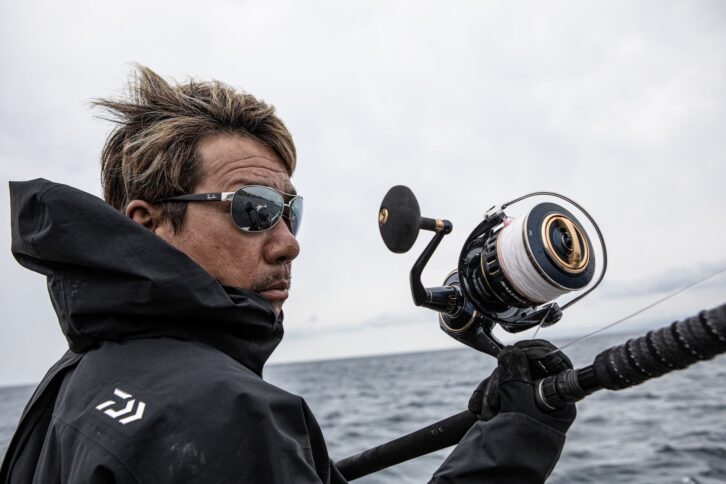
Photo courtesy: VARIVAS
For Sato, it’s not about the size of the tuna
Mr. Sato has landed many large tuna over the years. When he first pioneered bluefin tuna fishing, his goal was to catch big ones. But today, he says landing even larger tuna is not his objective.
“For an angler, aiming to break personal records is the natural path. But for me, my mindset as a craftsman is stronger than that of a pro angler. Therefore, I place greater emphasis on developing new rods and lures, and establishing new methods. Of course, catching a big one or breaking my personal record would be exciting, but I feel my soul is poured more into the craftsmanship. Rather than catching the biggest fish anyone has, I find it more rewarding when users of SOULS products achieve results, or when someone new to bluefin tuna fishing uses a lure I developed and says, ‘I caught one!’”
Because of this, when I’m out on the field, it’s often a test. However, since I’m out there, I always challenge myself assuming I’ll catch the biggest fish.
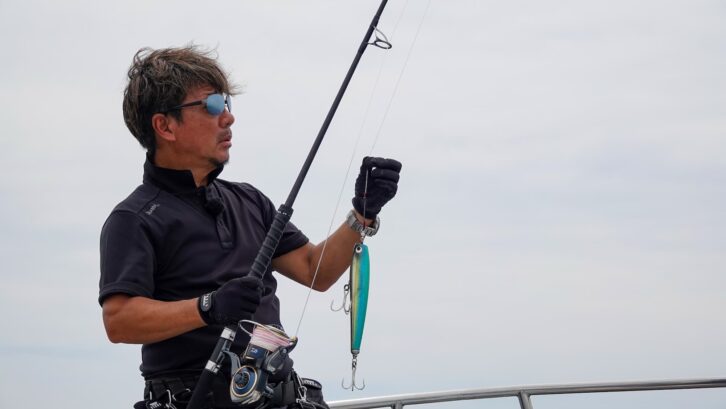
He has spent more time than anyone in Japan targeting tuna with lure casting. Alongside numerous catches, he has created tackle specifically for conquering tuna. Photo courtesy: DAIWA
Rods and Selections for Stylish Fishing
Sato’s tackle setup hasn’t changed significantly over the years. Within the SOULS casting rod lineup, the lightest class is PE2. Models suitable for bluefin tuna casting range from the lightest at PE6 class to the strongest models at PE12 OVER class. These are categorized by level according to the line used.
“For bluefin tuna casting, the SOULS rods used are the OCEAN’S Power Class LEVEL SERIES and the OCEAN’S Power Class ASHURA. Since the average size varies by region, the lineup ranges from the Level 6 (PE6) to the Level 14 (PE12 OVER). We recommend selecting from this range. However, with the recent increase in bluefin tuna average sizes nationwide, a minimum of Level 8 is advisable, with Levels 10, 12, and 14 being essential. We offer these levels in different rod lengths. Additionally, in 2025, DAIWA released rods I personally supervised. These vary not only in length but also in material, resulting in different handling characteristics. Level 8 rods are interesting for fishing because they offer good casting distance and results depend heavily on technique. However, if you’re targeting fish over 100kg in the field, you should definitely select Level 12 or 14 rods with PE12 line. That said, with tackle of this class, you’ll need to utilize wind strength and work in teamwork with the captain.
Use PE8, PE10, and PE12 lines, bringing three tackle sets. The tackle you prepare changes based on the field’s average size. It’s not always PE8, PE10, PE12; if large fish are common, bring PE8 and PE12 ×2. For fish up to the 80kg class, sometimes it’s PE8 ×2 and PE12.
Incidentally, the OCEAN’S Power Class LEVEL SERIES features: Level 6: 85cm Level 8: 75cm, 80cm, 83cm (different lengths) Level 10: 78cm, 83cm (2 types) Level 12: 76cm, 80cm (2 types) Level 14 (12-pound OVER): 76cm, 80cm (2 types) This series was created by Sato with zero compromise, disregarding cost performance entirely, to pursue ultimate performance for catching more bluefin tuna.
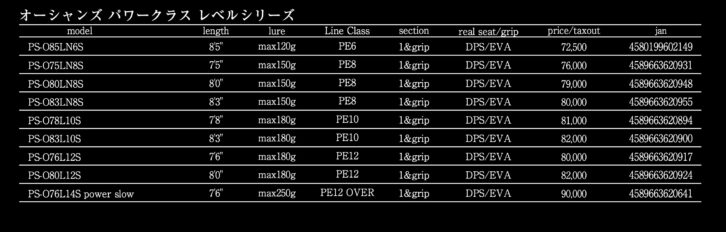
In addition to the specifications listed above, the “PS-080L14S POWER slow” has been added to the lineup.
Furthermore, the OCEAN’S Power Class ASHURA series is designed as a one-piece construction from tip to grip, pursuing lift power and casting performance. This model was perfected through repeated testing against monster-class fish during expeditions to America. It offers two models compatible with PE12 line (65 and 70) and a 70 death road model for PE12 OVER line.


The OCEAN’S Power Class LEVEL SERIES and OCEAN’S Power Class ASHURA are available in different lengths for each power class. By design, longer rods deliver greater casting distance, while shorter rods make fighting fish easier. The choice of length ultimately comes down to the angler’s preference.
So, what defines the characteristics of a SOULS rod?
“The constant goal for SOULS rods is exceptional lift power. We believe we conduct more break tests than any other manufacturer. We set our break strength specifications about two grades higher than other brands. We also pursue a resilient feel that makes fighting fish easier. Holding the rod upright is a given for SOULS rods. While straight fighting is sometimes necessary depending on the situation, the fundamental approach is to fight with the rod upright, applying solid pressure to the tuna and landing it stylishly. Furthermore, utilizing the rod’s elasticity makes the battle with the tuna more enjoyable while also reducing strain on the line and reel.”
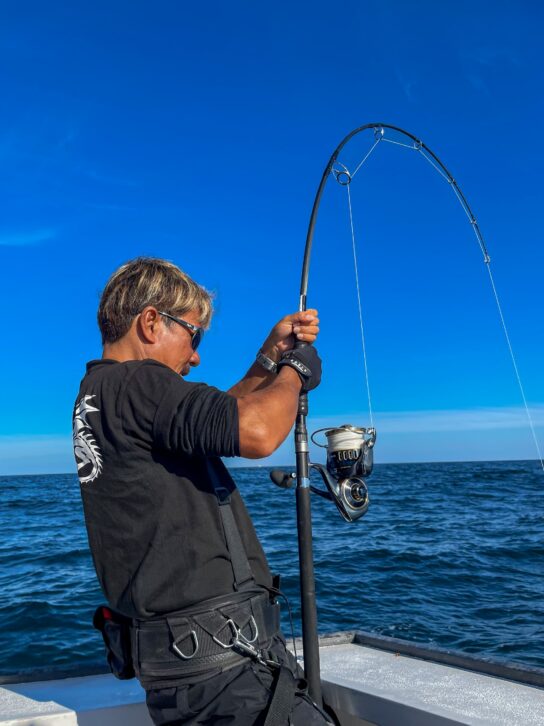
Sato’s fighting style involves raising the rod, bending it, and steadily applying pressure to bring the fish in. SOULS rods are built with the strength required for this technique. Photo courtesy: VARIVAS
【SOULS ROD / LEVEL SERIES / ASHURA】
https://souls.jp/products/salt-rod
Additionally, Sato oversees the development of models for DAIWA that feature specifications distinct from the SOULS rods. This is the “SALTIGA DOGFIGHT.” Combining Mr. Sato’s rod-making expertise with DAIWA’s technology, it embodies the performance he believes is essential for modern tuna fishing. The lineup features all four items in his signature style—84-6, 81-8, 76-10, and 72-12—all capable of being bent firmly to land fish. Mr. Sato poured his long-cultivated dedication to tuna rods into this model, thoroughly pursuing lift power, resilience, sensitivity, and lightness to achieve a well-balanced design.
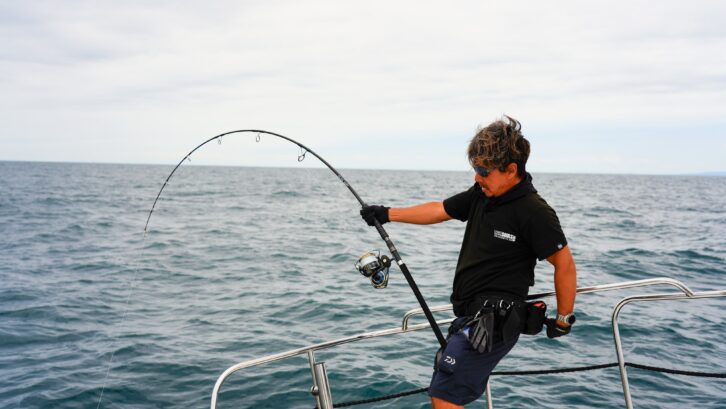
The model supervised by DAIWA, like the SOULS rods, is designed for solid upright fighting. It is said to cast easier than SOULS rods and be more user-friendly for beginners. Photo courtesy: DAIWA
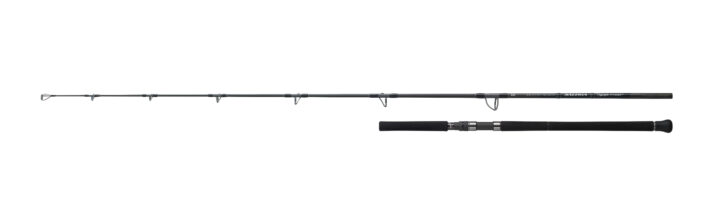

【DAIWA SALTIGA DOGFIGHT】
https://www.daiwa.com/jp/product/ye4akug
Without durability, you can’t fight. The significantly changed 25SALTIGA
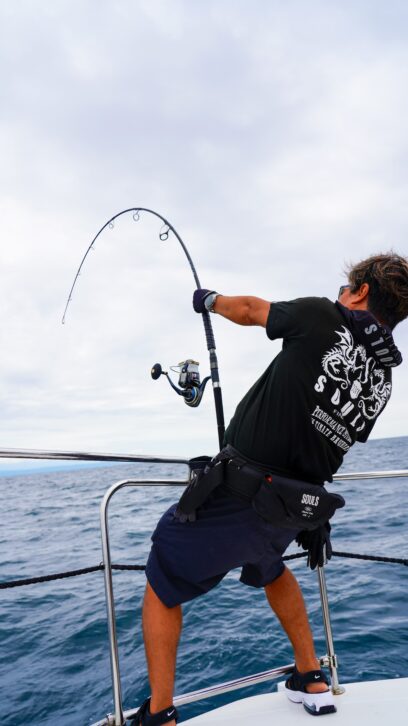
Photo courtesy: DAIWA
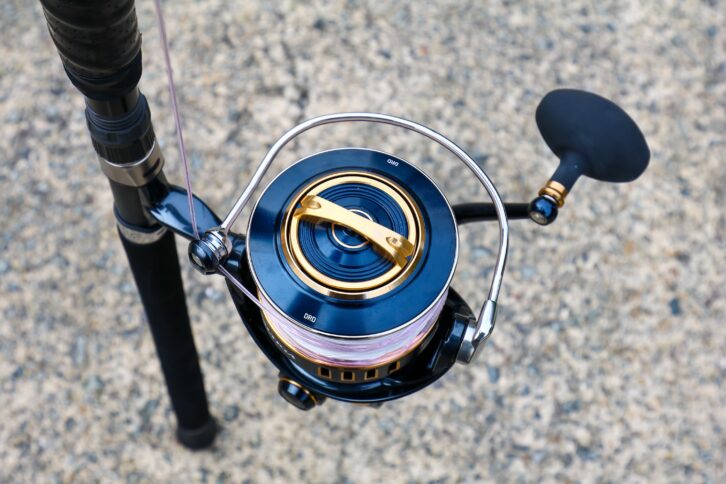
Of course, reel size is also selected to match the rod power. It absolutely must not break during a fight with a tuna, and the drag must function reliably under high loads without failure. The reel used is the 25 SALTIGA. While the 20 SALTIGA already represented a major transformation from previous SALTIGA models, the 25 SALTIGA has evolved even further.
“It’s changed significantly. I’ve been involved in developing the SALTIGA spinning reel for many years, always voicing my opinions. When the 20 SALTIGA came out, I thought it was a really good reel and felt it was sufficient. Even then, I kept pushing for further evolution by sharing various opinions. After countless tests, the completed 25 SALTIGA surprised me again. The retrieve is even lighter, the drag is stronger, the drag performance stability after a fish runs under high load has improved, and it’s more durable. I believe this is a reel the designers persevered to perfect.”
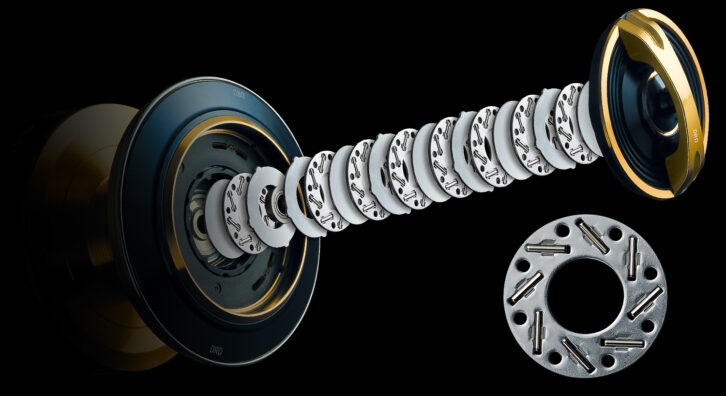
Regarding drag performance under high load, this is the most critical aspect in tuna fishing. He had repeatedly conveyed to the development team the demand that drag force not decrease. And with the 25 SALTIGA, they achieved a level that satisfied Mr. Sato. What made this possible was the DRD system, which employs a DRD washer featuring eight metal rollers mounted on a metal plate, replacing the previous carbon washer.
“With previous carbon drag systems, after a tuna’s powerful run, turning the drag knob back to the same position wouldn’t restore the initial drag load. This is because the carbon wears down. The grease also flies off. However, with the DRD, as long as the washer cools down, it maintains the same load. There’s no degradation. It doesn’t rely on grease either. It also has strong heat resistance. This evolution becomes a powerful weapon in tuna fishing. We received lab test results from DAIWA, but we couldn’t trust those alone. We actually hooked fish, pulled with a car, and after releasing line under high load, we verified if the same drag value could be set at the same position. It was indeed possible to set it reliably.”
Conventional carbon washers applied drag through friction at the contact points with metal washers. This meant that during intense line release at high drag settings, there was potential for drag force reduction due to high heat, wear, or seizing. However, the DRD uses metal plates that are highly resistant to friction degradation. It applies drag through the rotation and friction of the metal rollers mounted on the washers, tilted to achieve this effect, resulting in high durability.
Furthermore, the 25SALTIGA employs an oversized power drive gear, which is 10% larger in diameter and 6% thicker than the 20SALTIGA’s drive gear.
“The 20SALTIGA was already larger, but this is even bigger. That size difference makes the feel completely different. The retrieve is incredibly light. Personally, when I have a fish hooked, I don’t rely solely on reel power to bring it in; I use the rod’s rebound to reel it in. So, I don’t feel much difference from the larger gear size. However, when repeatedly casting to entice fish, I really notice the difference in lightness, and it reduces fatigue. By the way, using the rod’s rebound to reel in prevents reel damage. Some people try to fight fish using only the handle, but that often breaks the reel. Incidentally, I felt the SALTIGA’s durability even with the 20 model. I used it during testing and landed about 100 fish without needing any replacement parts. That robustness remains intact with the 25SALTIGA. You can keep using it with confidence.”
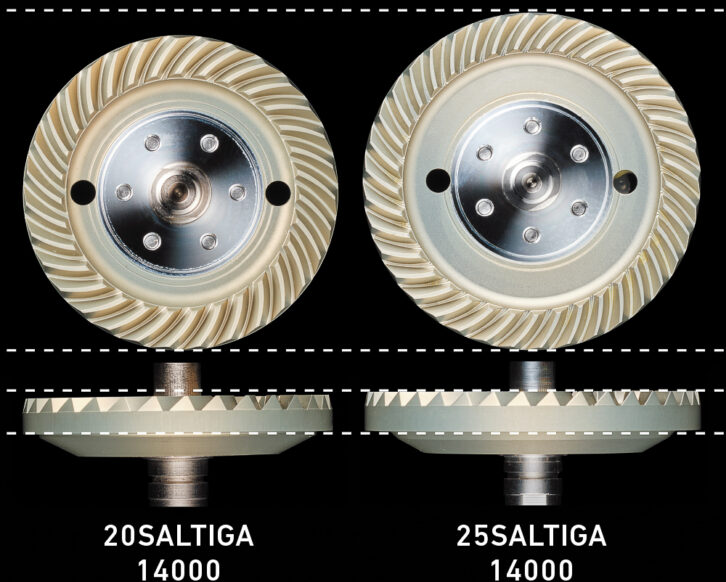
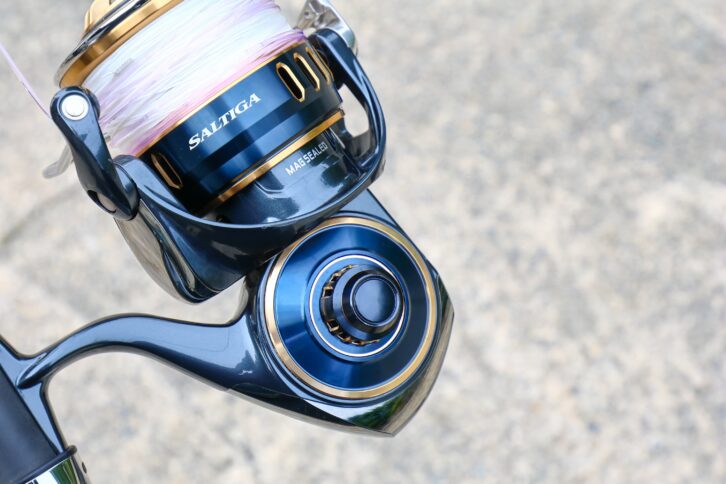
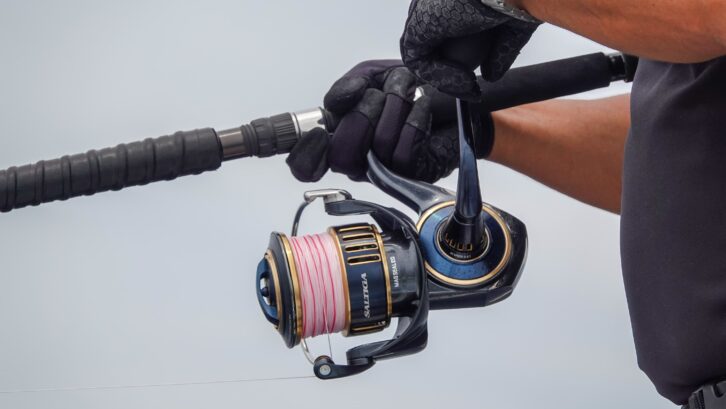
The 20SALTIGA introduced a monocoque body and larger gears, but the 25SALTIGA features even thicker, larger gears. This delivers an even lighter retrieve feel. The rigidity and airtightness provided by the monocoque body remain intact.
Incidentally, Mr. Sato uses the 25000 and 20000 models for bluefin tuna fishing. The choice depends on the line thickness used. Incidentally, the 25000 is sold as a Power Gear model, but which is better: High Gear or Power Gear?
“I used High Gear for many years because targeting schools of fish was the main approach. When targeting schools, you cast toward them, and if there’s no hit, you need to retrieve quickly and cast to the next spot. However, lately, enticing the fish out is more common, and I feel Power Gear works just fine. Personally, my reason for choosing power gear isn’t because it makes reeling in easier after a hit. During the fight, I hold the rod upright and use its rebound to reel in. So, the power provided by the power gear isn’t that crucial in that situation.”
However, in the final battle with bluefin tuna, you often need to switch between fighting with the rod upright and fighting straight. For anglers like Mr. Sato who can smoothly switch fighting styles based on the situation, this isn’t a problem. But for those less accustomed, they often struggle to switch from a straight fight stance and end up fighting by gradually retrieving line whenever possible. In such situations, a power gear becomes a significant ally for the angler.
Incidentally, the 25000 and 20000 models share the same body. Therefore, anglers seeking quick, efficient strikes on baitfish schools might consider mounting a 25000 spool onto a 20000 high-gear body.
Additionally, it has been announced that the 30000 model, tested by Mr. Sato, will be released in 2026. While the 25000 holds 300m of 12-pound line, the 30000 will offer even greater line capacity. The arrival of the 30000 size should bring changes to tuna fishing. We’ll cover Mr. Sato’s thoughts on the 30000 size and its handling characteristics at a later time.
【25SALTIGA】
https://www.daiwa.com/jp/product/i25pggl
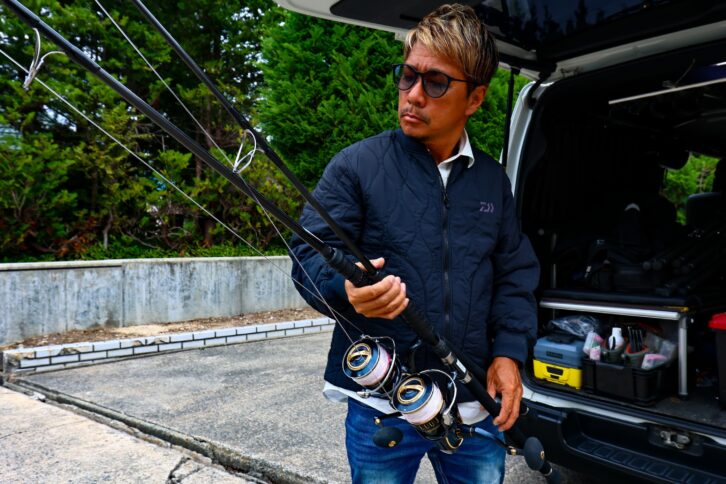
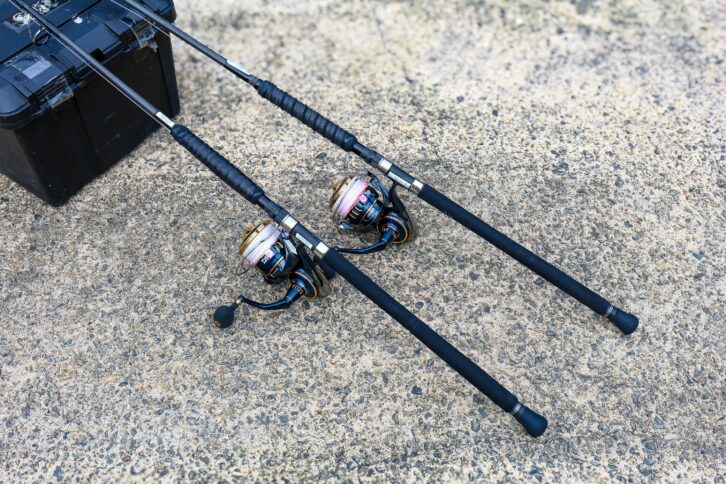
The main tackle Mr. Sato had prepared for the actual fishing session scheduled after the interview. For this session, he brought the OCEAN’S Power Class LEVEL SERIES 076L14S and the OCEAN’S Power Class ASHURA 070PCS death road model. Both reels were SALTIGA 25000, spooled with PE 12-pound line.
High-durability line is essential for tuna fishing
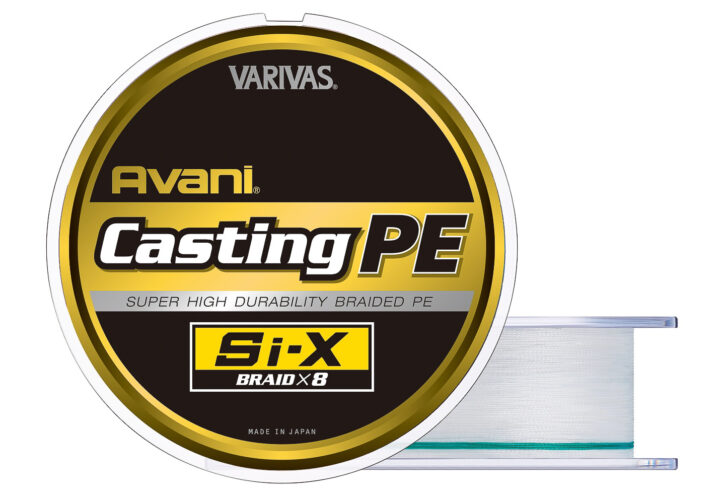
The main line used is exclusively “VARIVAS AVANI Casting PE Si-X X8”. Incidentally, he chooses this line not only for tuna but also for fishing for GT and amberjack. It’s a line Mr. Sato produced specifically for tuna casting.
“Before Si-X, I used ‘AVANI Casting PE SMP’. Si-X is a line enhanced for high durability to withstand the powerful runs of large bluefin tuna, and to reduce friction heat generated when passing through line rollers and guides. While standard PE lines receive surface coating after braiding, ‘VARIVAS AVANI Casting PE Si-X X8’ incorporates the special heat-resistant material ‘Si-X’ into the base filament during the pre-braiding stage. This prevents the coating from peeling off, maintaining high durability and heat resistance for extended periods. Consequently, it also minimizes fraying.”
Mr. Sato’s proven track record of landing numerous large tuna confirms its performance.
【VARIVAS AVANI Casting PE Si-X X8】
https://www.varivas.co.jp/Product/searchgroup/id:4521
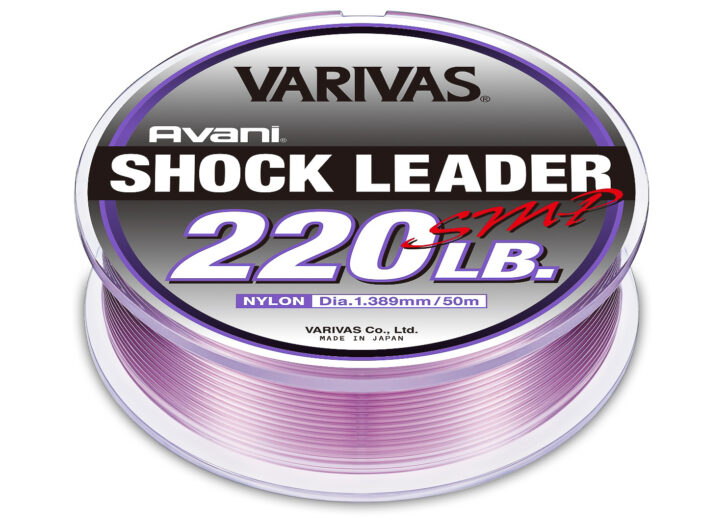
Additionally, the SMP nylon leader released in 2025 performs exceptionally well in tuna fishing. First, it’s supple and resistant to kinking. It also boasts high linear strength and abrasion resistance. Furthermore, we revised the base filament to provide about 10% more stretch than standard nylon. This stretch supports the angler during high-load fights. Furthermore, its softness makes it compatible with friction knots. The PE line bites into the leader, achieving high strength.”
They also paid meticulous attention to color selection.
“We repeatedly filmed the appearance from underwater to the surface under different weather and water color conditions, analyzed how color differences affect visibility, and adopted the colors we arrived at through this process. Improvements in reel performance have increased the load on the line compared to before. Since nylon leaders deteriorate over time due to water absorption, we considered the burden on nylon to be greater and selected thicker pound ratings of 250lb and 300lb than conventional leaders. However, thicker lines are more conspicuous, so we thoroughly pursued colors that would be inconspicuous.”
【AVANI SHOCK LEADER SMP】
https://www.varivas.co.jp/Product/searchgroup/id:5140
The “Fighting Leader” was born with the goal of achieving 100% connection.
Incidentally, VARIVAS has a product called the “Ultimate Fighting Leader” supervised by Mr. Sato. It is a model with Zylon material set at the tip of the leader and equipped with SOULS’ BB Power Max Swivel “BB STRONG”.
This leader was born from Mr. Sato’s desire to maintain 100% strength in the line used. Normally, when a line is tied, its strength decreases. Therefore, after much trial and error, Mr. Sato perfected a knot called the “16 knot,” an improvement on the mid knot, for tying PE line and leaders. This knot allows the leader to exhibit strength equivalent to that of the main PE line. This tying method involves gradually tightening using the entire body. While not ideal for boat-based work, it has never resulted in a break or slip at the knot point. It achieves a 100% strength tie matching the PE line’s strength, and over the years, this knot has landed countless tuna.
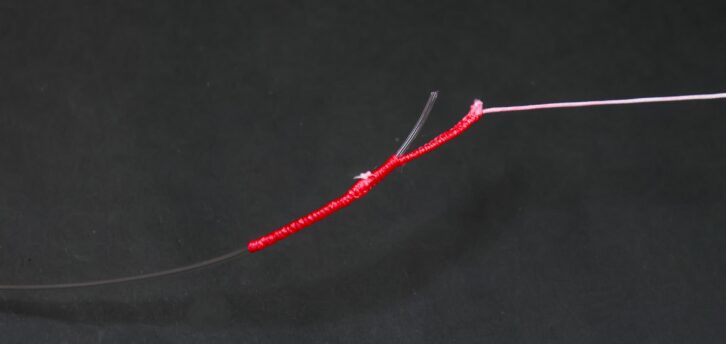
The result of this perfect knot led Mr. Sato to focus on the strength at the leader-to-ring connection point. He researched ways to achieve a knot strength close to 100% at this point, and the result was a method of covering the leader with Zylon and securing it to the BB swivel with thread. This method has been made available to everyone as the Ultimate Fighting Leader.
The swivel knot using Zylon in the Ultimate Fighting Leader was originally developed in pursuit of a 100% knot strength. In reality, it is not tied, but secured by pressure. Therefore, there is no reduction in the strength of the leader, and the knot does not come loose even during high-load fights. Furthermore, considering situations where tuna, such as the Shira pattern, may swallow the lure, different lengths of Zylon were created from the perspective of preventing the teeth from cutting through. Incidentally, some people may think that having Zylon at the tip makes it harder to get a bite, but I have never felt any difference in the catch. This is true not only for tuna, but also for GT and yellowtail.
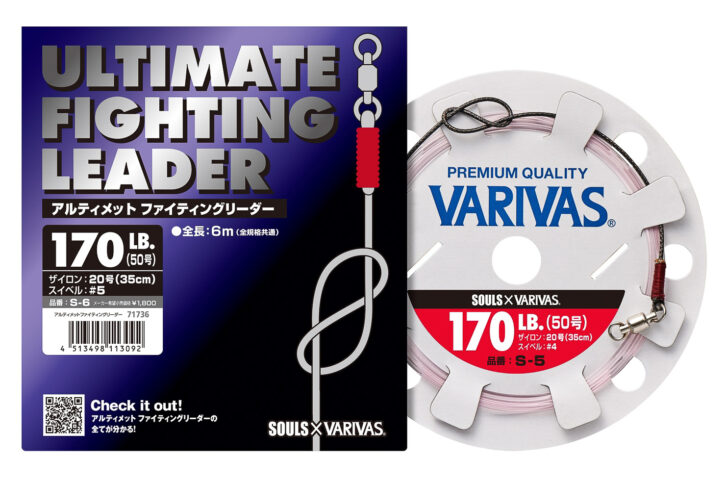
The Ultimate Fighting Leader comes in different lengths of Zylon knot. The INVITED MODEL (5cm) is a short model designed specifically for enticing fish, offering excellent lure maneuverability. The MULTI MODEL (10cm) is a medium design suitable for both shooting at schools of fish and enticing fish. The SHOOTING MODEL (35-45cm) is a long Zylon model designed specifically for shooting into schools of fish, providing peace of mind even when fish swallow the lure whole or hook it sideways. The tip is equipped with a strong SOULS BB swivel that is easy to thread through guides. Leader strengths range from 105lb to 220lb.
【VARIVAS Ultimate Fighting Leader】
https://www.varivas.co.jp/Product/searchgroup/name/type:/view3:2/id:4863
Incidentally, the Ultimate Fighting Leader uses the “Abani Casting Shock Leader Maguro” supervised by Mr. Sato, but a model using SMP nylon leader is also scheduled to be released in the future. Please refer to the video below for how to tie a 16-knot knot.
【Video Explanation of the 16-Knot Knot devised by Ichiro Sato】
Spacer System and Spare Spool
Currently, as mentioned above, Mr. Sato uses a 16-knot knot to connect the PE line and the leader, but in recent years, he has adopted a spacer system above the knot. The PE line above the knot is prone to wear from repeated casting. However, inserting a spacer eliminates this drawback. At the time of the interview, this spacer was still in development, but in 2026, an easily attachable spacer will be released under the name “Avani Casting PE Protect”.
“Personally, even a single fray on the PE line bothers me. But as long as the current spacer system is in place, unless a fish is hooked, repeated casting won’t degrade the area above the PE-leader knot. Both the mainline Si-X and the SMP leader show minimal degradation. In tuna fishing grounds, there’s no risk of damage from sharks or barracuda, so if nothing bites, there’s no need to change the spool. However, if a large tuna strikes or I feel the line rubbing against the boat’s hull, I switch to a spare spool with fresh line. At that moment, I need to prepare quickly for the next opportunity. There’s no time to tie a knot. That’s why I keep spare spools pre-tied with knots ready.”
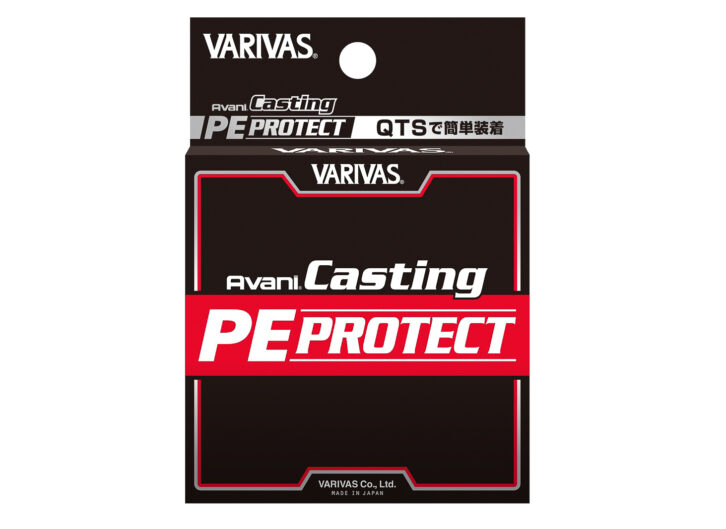
【VARIVAS AVANI Casting PE PROTECT】
https://www.varivas.co.jp/Product/searchgroup/id:5169
For replacement spools, bring about 10 per fishing trip, each pre-rigged with a perfect 16-knot line system. You can’t tie a 16 knot on the spot. You might consider using another knot instead, but that won’t achieve 100% strength. If another knot only provides 70% strength, the PE line effectively becomes one grade weaker. That defeats the purpose of using thicker line. That’s why you prepare spools with the line system tied in advance.
Incidentally, when winding line onto the spool, the golden rule is to apply firm tension to prevent the line from digging in during the fight. However, applying excessive tension is also undesirable. For PE line of 5-weight or higher, a load based on “weight number × 500g” is considered a safe benchmark.
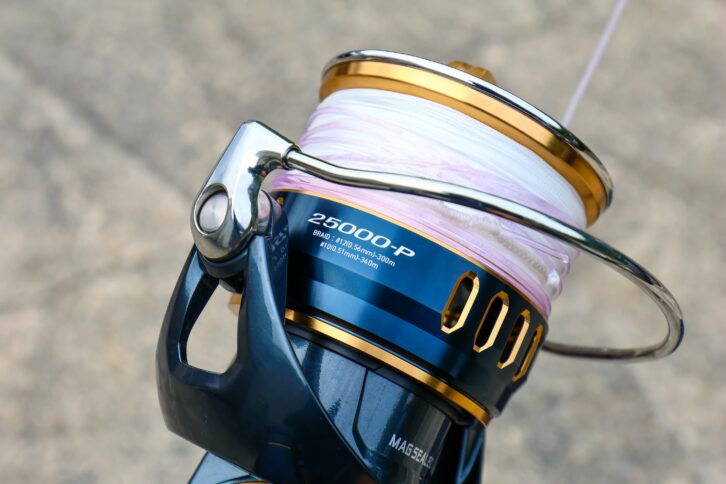
Wind the line tightly with tension. However, excessively high tension damages the line. It is important to spool with the appropriate load.
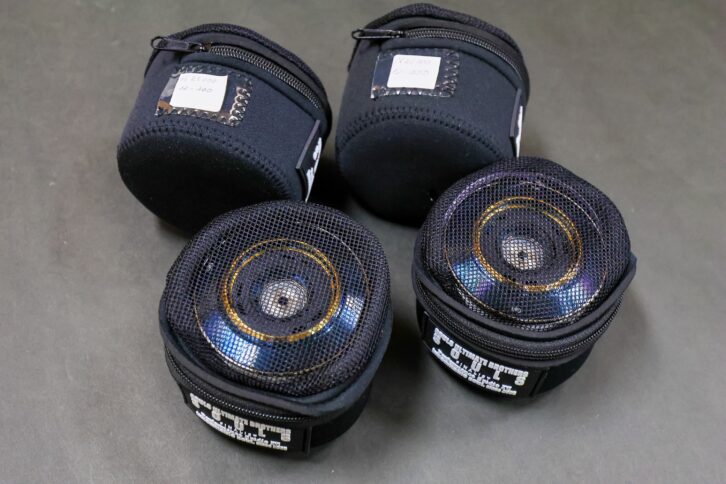
Bring plenty of spare spools. Since adopting a spacer system, the number of spool changes has decreased, but you never know what might happen on a boat.
SOULS BB Max Power Swivel – No need to tie knots at the fishing spot
SOULS offers a lineup of original ball bearing swivels. These are also used on VARIVAS’ Ultimate Fighting Leader. We asked about their performance.
“First, we aimed to ensure they don’t kill the lure’s action. Furthermore, we aimed for sufficient strength. To reduce resistance, we made the ring diameter smaller, while designing the ring wire diameter thicker to ensure strength. This smaller diameter also allows it to pass through the rod guides while attached. Sizes range from #4 to #7, and even the #7 fits through all the guides on SOULS tuna casting rods. This means that if you set up your line system at home with the swivel attached, including spare spools, you don’t have to tie it at the fishing spot. Before the BB Max Power Swivel was created, swivels with equivalent power had large rings that wouldn’t fit through the guides, so we had to tie the swivels on site. That hassle is now unnecessary.
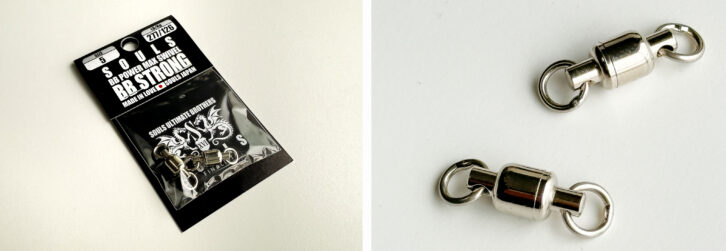
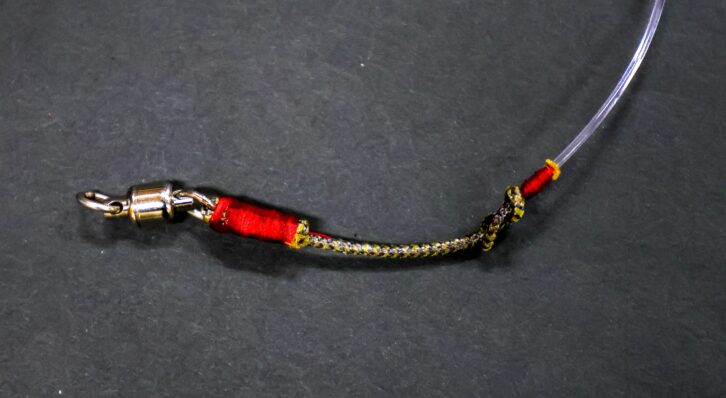
The VARIVAS Ultimate Fighting Leader is equipped with SOULS’ BB Max Power Swivel. The ring is thick and strong, yet designed with a small diameter.
Hook Selection & Favorite Rings
Mr. Sato mainly uses treble hooks. He follows single hook regulations when fishing overseas, but otherwise chooses trebles.
“Singles and trebles each have their own characteristics. Singles are hard to pull out once hooked and offer greater casting distance. However, since the hooking probability is low, trebles are overwhelmingly advantageous in situations where fish are less likely to bite. Incidentally, I have no hook endorsement deals, so I use various manufacturers. Personally, I prefer straight-point hooks that penetrate quickly.”
For rings, he uses SOULS’ original “Tune Split Ring.” This ring is a model commissioned from DECOY Inc.
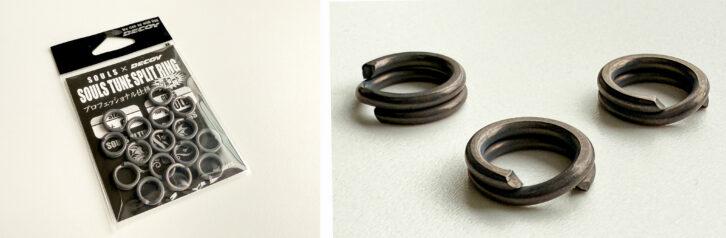
“Because DECOY’s split rings are exceptionally strong, I consulted with them and placed an order. Among all I’ve used, these are the strongest. While fishing for bluefin tuna in the US, I’ve seen 400lb split rings stretch repeatedly, but DECOY ‘s never did. The reason lies in the ring’s cut surface. It’s not cut vertically but at an angle. If cut vertically, the wire part of the lure can lock onto the single-sided section at the cut surface. When twist is applied there, the ring can open. However, DECOY ‘s split rings won’t open because their cut surface is angled. We fell in love with this design. To make it even harder to lock, SOULS’ original model features a fluorine coating to improve slippage.”
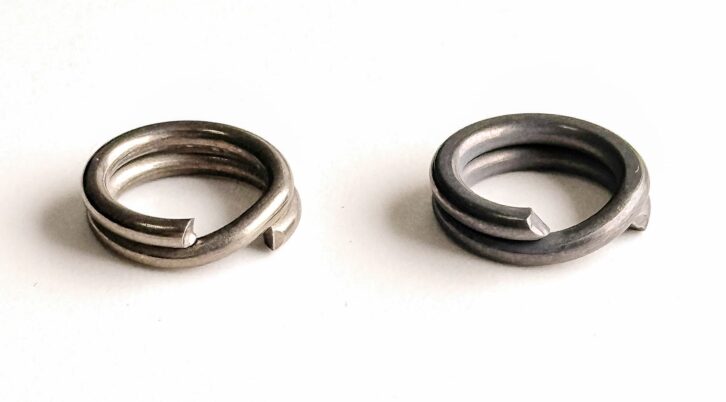
Left: Standard split ring. Right: SOULS’ tuned split ring featuring a fluorine coating applied to KATSUICHI/ DECOY ‘s split ring. Notice the angled cut surface. This angled cut prevents the lure wire from locking onto the cut surface, allowing it to slide instead, thus preventing the ring from opening.
Lures and Selection Developed for Targeting Tuna
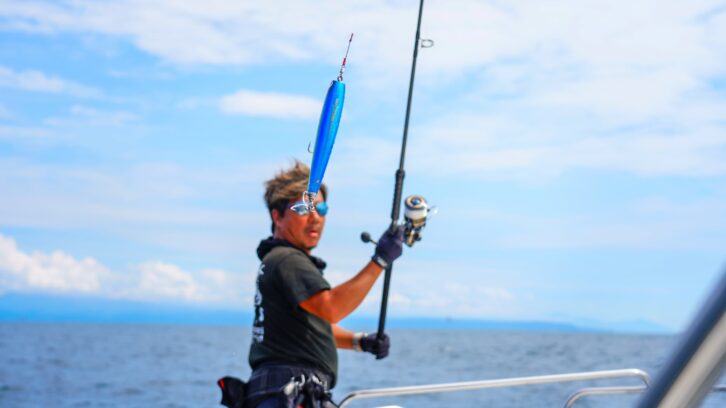
Photo courtesy: DAIWA
Regarding lure selection for specific situations, there is no single definitive answer like “use this one in this scenario.” Each lure represents Mr. Sato’s relentless pursuit of optimal movement and appeal specifically for targeting tuna. Currently, the plugs in the lineup designed for tuna include: “MOGURAPPER,” “MOGURAPPER SLIM,” “DYNAMAITE DON DON,” “SHIBIYAMA,” and “COMSŌ,” each considered indispensable.
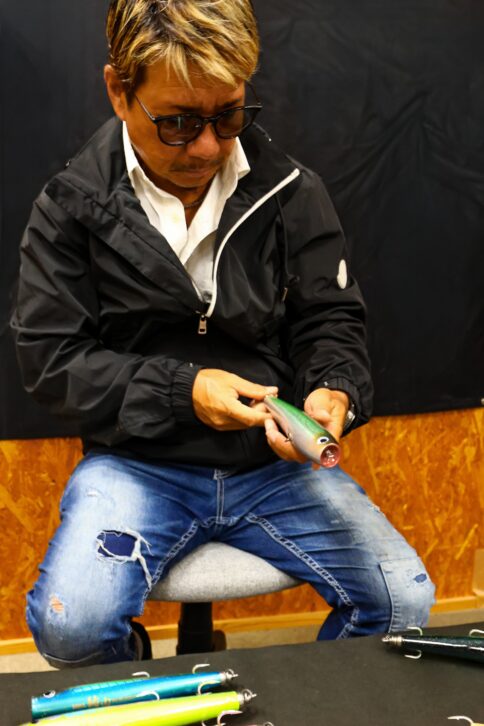
SOULS lures, born from studying bluefin tuna predation and countless experiences. Their popularity is understandable, given Mr. Sato’s extensive proven track record.
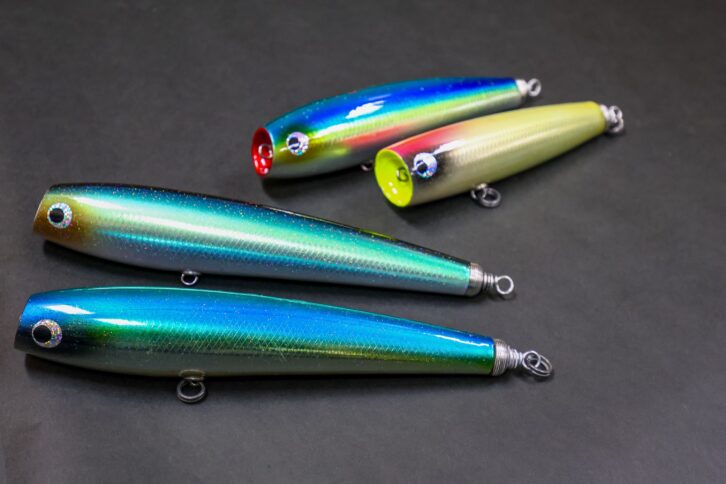
“Honestly, I think it’s best for anglers to use the lure they want. You never know which one will get a hit, and results vary depending on the user. However, each model has a clear purpose.
First, we released the 190mm ‘MOGURAPPER’. But generally, the preferred size is the 230mm ‘MOGURAPPER SLIM’. Both weigh 150g. My bluefin tuna fishing approach prioritizes getting the fish hooked first, then considering whether I can land it reliably. The shorter, thicker silhouette of the MOGURAPPER offers a higher landing probability. Why? Because its shorter, sturdier design increases the chance both front and rear hooks will set in the fish’s mouth. With the MOGURAPPER SLIM, there’s a chance only one hook will set, or the free hook might set on the outside. A single-hook set risks the fish shaking it off, and an outside hook set inevitably prolongs the fight, increasing the risk of hook-outs. However, its light resistance during retrieval and ease of handling make it popular. Furthermore, the ‘DYNAMAITE DON DON’ was developed to enhance the appeal even more than the MOGURAPPER. Compared to the DYNAMAITE DON DON, the ‘SHIBIYAMA’ silhouette is favored by many anglers due to its longer overall length, better flight posture, and ease of continuous jerking. Incidentally, for skipjack patterns, the proven ‘COMSŌ’ is often chosen.
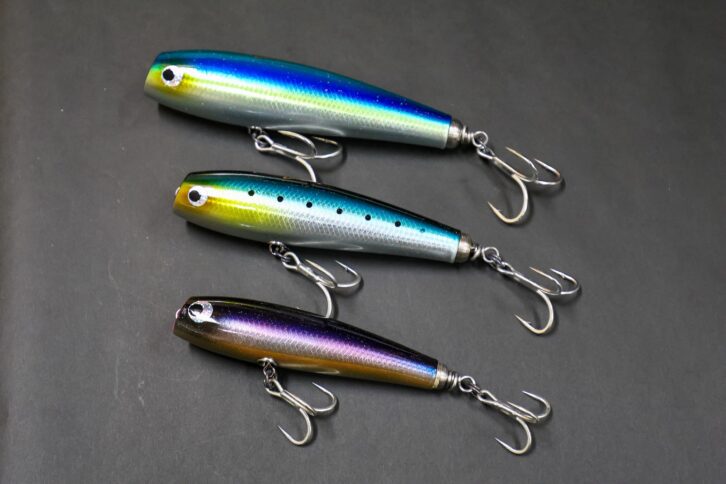
The popular “MOGURAPPER” with a proven track record. A swimming sound pencil that generates sound while swimming with bubbles, featuring a cup design. Its thick, short silhouette aims to reduce hook-outs by hooking both front and rear hooks inside the tuna’s mouth during the bite. Available in 45g/130mm, 75g/150mm, 105g/170mm, and 155g/190mm.
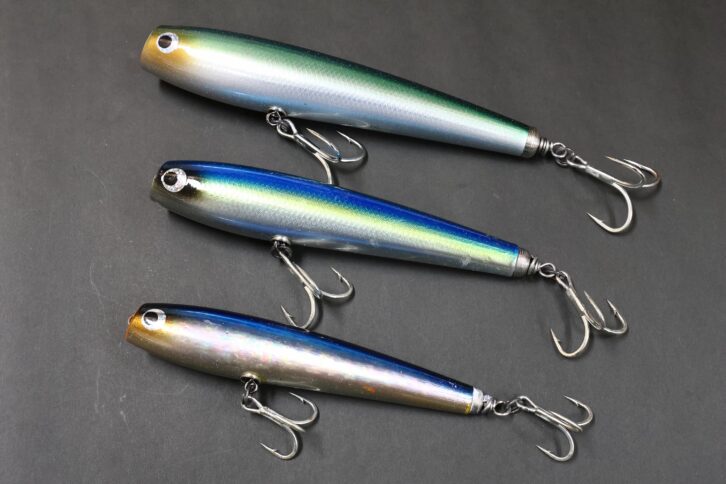
The “MOGURAPPER SLIM” emerged as the successor to the MOGURAPPER. The slim shape is more popular than the shorter, thicker model. Its slender, elongated design offers less resistance during action, excelling in situations where a longer swimming distance compared to the MOGURAPPER makes it easier to get bites. Lineup: 65g / 170mm, 90g / 190mm, 120g / 210mm, 150g / 230mm, 250g / 300mm.
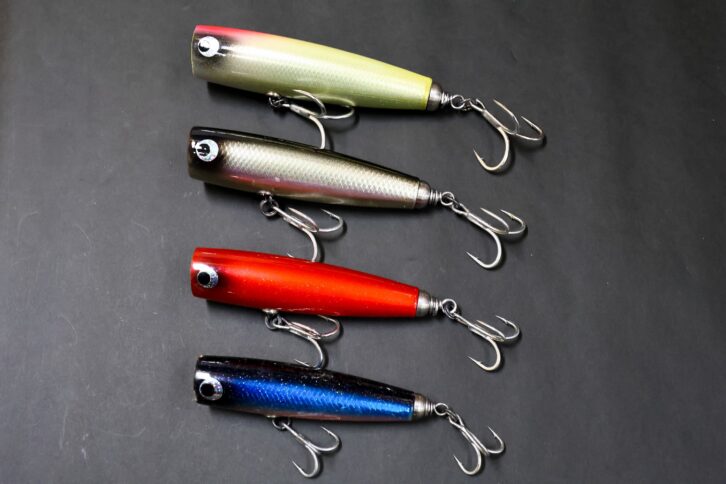
Evolve the MOGURAPPER for a powerful sound and long-distance casting performance effective for targeting schools of fish. “DYNAMAITE DON DON.” The sound generated from its large cup is not just loud; it’s tuned to match the predatory frequencies of fish eaters. Its big bubbles create a strong appeal when enticing fish, making it particularly effective in situations where fish are reluctant to bite. Available in 55g / 130mm, 75g / 140mm, 95g / 150mm, and 115g / 160mm sizes.
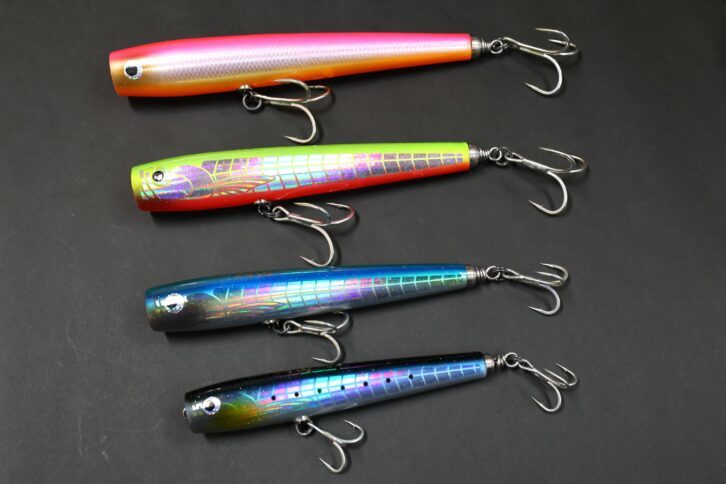
Like the DYNAMAITE DON DON, the “SHIBIYAMA” generates sounds tuna prefer via its large cup while swimming with bubbles clinging to it. In tough conditions or when fish are reluctant to bite, its high appeal draws them in, and its swimming action stimulates their predatory instincts. Available in 65g / 180mm, 95g / 200mm, and 125g / 220mm.
【SOULS LURE‘S】
https://souls.jp/products/salt-lure/
During the interview, they also showed us lures currently in development.
“In today’s tuna fishing, many anglers use popper-style lures. SOULS also has many popper-shaped models. We believe SOULS’ AIRMATIC started this trend. It’s a lure with a small cup. We added this small cup because we believed sound appeal was crucial. It produces sounds tuna prefer while creating fine bubbles along its swimming path. This combination of sound and bubble production yielded significant results. Building on that performance, we developed subsequent models.
While other manufacturers released pencil-style lures, we wanted something different. We launched lures like the MOGURAPPER, MOGURAPPER SLIM, DYNAMAITE DON DON, and SHIBIYAMA, all featuring cups designed to attract fish through sound and swimming action. However, recently, similar popper-style lures have increased from other companies. So, we’ve returned to our roots and are currently developing pencil-style lures. Visually, it resembles a standard pencil lure, but its application differs. It’s an unprecedented floating pencil. It has demonstrated significant results, so please wait just a little longer for its release.
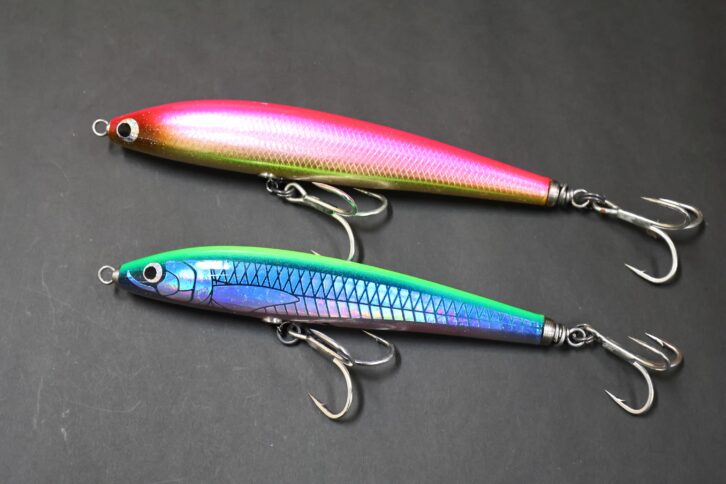
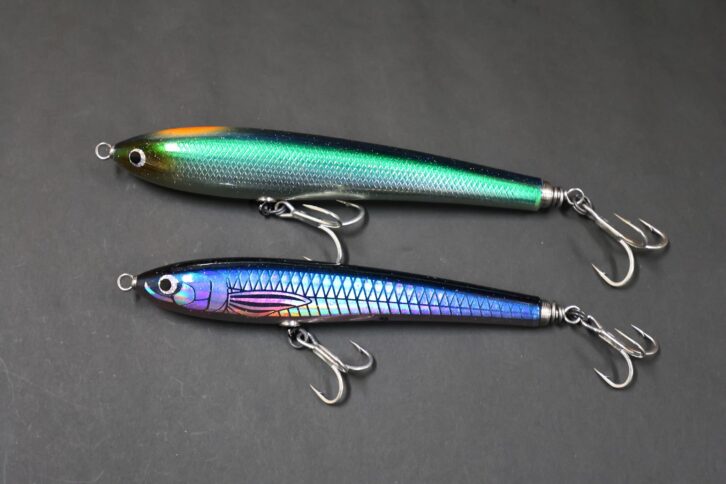
A pencil lure currently in development. Details cannot be disclosed yet, but it is slated to debut alongside a new method. It’s a lure eagerly anticipated for release.
How do you probe for fish during actual fishing, and how do you handle the fight?
Targeting tuna involves two approaches: striking the bait ball and enticing them out. So where do you cast, and how do you entice them?
“If there’s a bait ball, cast your lure beside it. Casting right into the center risks line breakage, so caution is needed. For bonito bait balls, read where the tuna will emerge next and cast there. Even when mackerel are present, read which direction the tuna are heading and cast ahead of their path.”
If no tuna appear after a few actions, retrieve and prepare for the next cast.
For enticing them out, focus on areas around current lines, bird activity, or spots where single jumps occur.
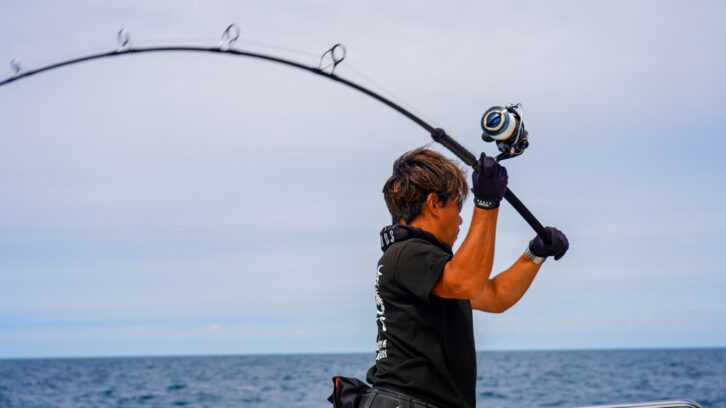
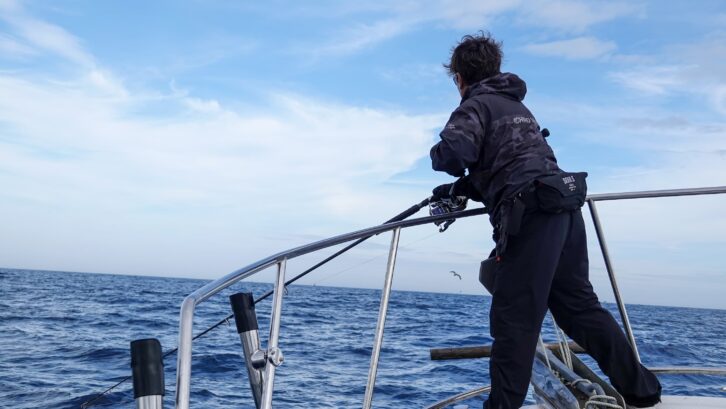
Carefully track the tuna’s movements and predict its direction before casting the lure. It’s crucial to assess the situation quickly and cast without rushing.Photo courtesy: DAIWA
“When you get a hit, I don’t focus too much on the hookset itself. First, I create the trigger to make it a reverse hookset. I give the rod a single, strong jerk. This rod action is to make the fish run toward the opposite side. If it runs that way, the hookset is set.
At this point, I set the drag to around 10kg. During this first run, I judge the size of the fish. Watching its run style, I gradually increase the drag to gauge its size. If it seems sizable, I raise the drag to around 20kg or 25kg. While feeling the tuna’s movements, I also assess how it’s hooked.
Then, matching the speed at which the reel spool cools down, I gradually lower the drag setting. I reduce it to about 15kg. Initially, I let it run while keeping the rod tucked under my arm, but the timing to raise the rod varies case by case. If you judge it to be around 100kg, raise the rod when the fish stops running. If you determine it’s a large fish or it makes a powerful second run, adjust the drag to stop it. Once the fish stops running, raise the rod to apply pressure and start pumping to retrieve line. If you judge the hookup to be poor, don’t force it. Keep reeling with the rod tucked under your arm until the tuna comes directly below you. When it’s directly below, raise the rod slightly and begin the fight.
If hooked sideways, you can’t force it much, and the fish’s pressure makes it hard to bring it up. Use the fish’s swimming motion to reel it in. When it comes directly under the boat, hold it against your side and endure. When it moves away from the boat and toward you, lift the rod to close the distance.
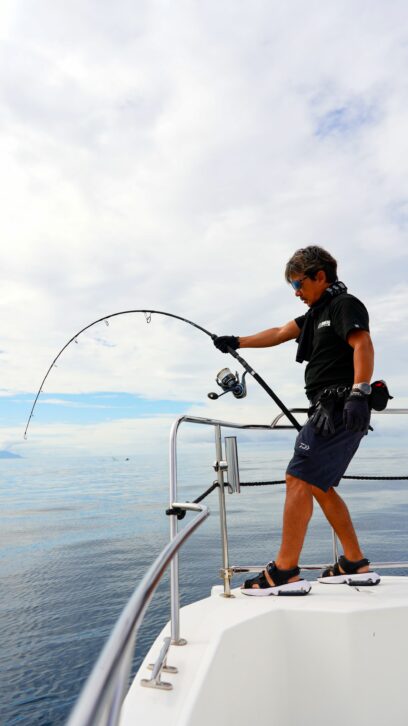
Reel it in while observing the tuna’s movements. Determining where it’s hooked is also crucial.Photo courtesy: DAIWA
Tuna put up strong resistance in the final 30 meters, so conserving strength to overcome this is vital. Once past this point, close the distance as much as possible while reeling. Combine armpit pressure with raising the rod during this phase.
When the tuna circles under the boat, guide it with armpit pressure to prevent line abrasion against the hull. Once the tuna surfaces, it’s caught. Whether releasing or keeping it, guide the tuna to the captain’s position to complete the process.
For release, hook the SOULS Gaff or Monster Rolling Gaff onto the tip of the lip, just under the skin. Then, remove the lure using the SOULS Releaser II to finish. These release tools are items perfected through countless tests.
“It really allows for a simple and smooth release.”
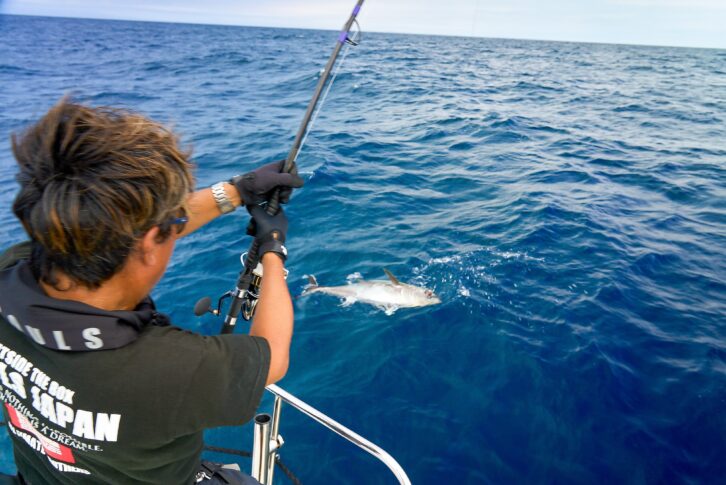
Once the tuna surfaces and takes air, the process is complete. However, the fish may struggle during landing or release. This is also a time when accidents can easily occur, such as the lure flying off or tangles with the line or gaff rope. Stay focused until the very end. Photo courtesy: DAIWA
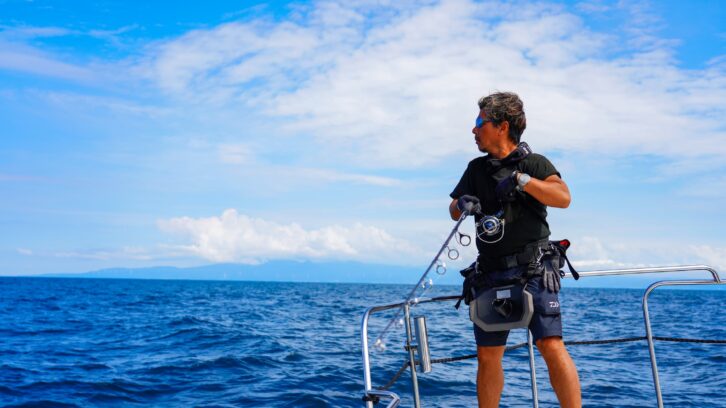
Photo courtesy: DAIWA
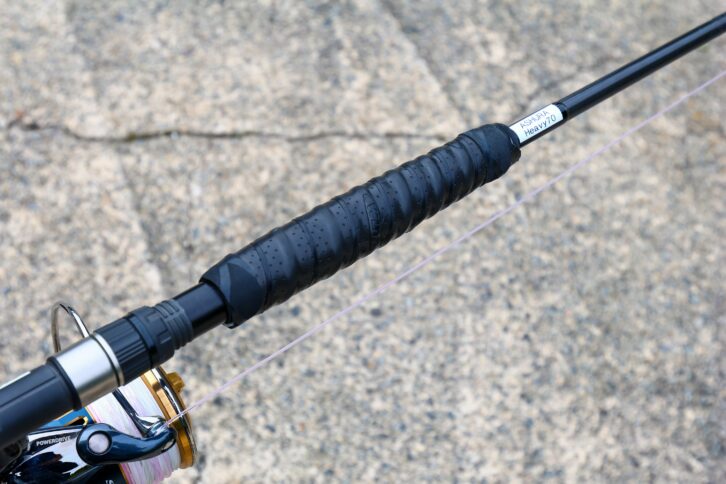
Gloves and gimbals are essential. He also highly recommends grip tape that pairs well with SOULS gloves. Many people who try it on one rod end up wanting it on all their rods.
“I personally call it ‘grip support.’ It lets you hold the rod securely without gripping it tightly, as it catches on your hand. During the fight, your grip strength gradually fades, but with this, you feel secure and the fight becomes significantly easier.”
For Anglers Challenging Bluefin Tuna
“Lately, large tuna are becoming more common. If you’re going to take on the challenge, I urge you to use tackle that will reliably land the fish. That means everything, including your line system. Research it yourself, practice, and anticipate various scenarios before you go out. Also, fighting large tuna always carries risks. Please be extremely mindful of safety. Accidents are especially common during the landing phase. When landing a fish, you must be mindful of various points: don’t raise the rod, avoid grabbing the line unnecessarily, and if using a spear, pay close attention to the rope’s position and movement.”
The bluefin tuna casting game is one Mr. Sato has engaged with and researched for many years, establishing his own style while proposing new methods. Yet, he remains unsatisfied with its completion, constantly seeking the next stage in tuna fishing. Furthermore, his research into tackle and methods extends beyond bluefin tuna to include targets like yellowfin tuna, GT (giant trevally), and Yellowtail. We at Anglers Time aim to pursue the “next frontier” that Mr. Ichiro Sato seeks, encompassing all these endeavors.
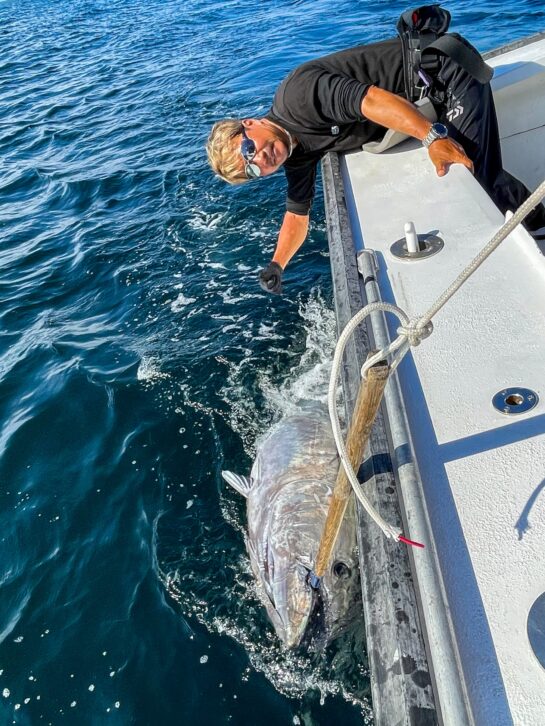
Photo courtesy: VARIVAS


関連記事
-

A new assassin for cherry salmon jigging The new 130g SALTIGA Jive Chopper!
-

Jigging & Tie Laba in the Kakurikinada Sea, Nagasaki Prefecture
-

GOSEN releases trouble-free PE line & Compact Nylon Leader Released!
-

Rods to watch out for in bluefin tuna casting TRUTH JAPAN “Whitelnsight 7610” and “Whitelnsight 8210”
-

Safe offshore fishing is with deck shoes that keep your feet on the water. Shimano Boat Game Dry Deck Shoes
-

Short-length model with enhanced playability now available
-

Equipped with Okuma’s Unique “Flight Drive Technology” The Next-Generation Reel with Smooth Winding: [TESOLO LDJ]
-

Jigging for Red Seabass in the Middle and Deep Sea
Tackle selection by expert angler Yasuo Nishimoto -

Unprecedented high performance drag Boasts unparalleled reeling performance Daiwa / Kohga IC200
-

It’s finally here! Shockingly high spec! 100m roll PE line in the 1,000 yen range (excluding tax)!
-
A gem of a plug that balances the best parts of wood and resin. A gem of a plug that uses the best parts of wood and resin in a well-balanced way. ZESTA, Maverick & Iceman
-
Fishing festival limited items now available for purchase! The New Yokohama Fishing Show
-

Ripple Fisher’s popular jigging rod series Three New Models Added to the SELFISH Series
-
Effective for vertical jigging with heavy-weight jigs! Drag Force bait model now on sale!
-

Block out the intense sunlight! Focus on hats, a must-have for summer fishing
-

Light jigging makes the difference in fishing results Flagship rod 【SALTIGA LJ EX】
-

A must-see for anglers! The latest offshore casting rod, “Baudeville,” reduces strain and maximizes casting distance. Now available!
-

Increased casting distance and improved casting stability, Equipped with new movement! Shimano [Gravitator 220SF]
-
Kei Hiramatsu x yellowtail amberjack method of fishing Jigging Jerk Patterns and Tackle
-

If you want to shoot at nabura, this is the one! A super lure that can be cast as far as 100 meters! [SHIMANO OCEA Pencil Solid 100HS]