Field-Tested in Actual Spanish Mackerel Casting!
Experience its astonishingly smooth performance!
GOSEN’s NEW PE Line
【GUIDUS PE×9】
& The go-to lure for Spanish Mackerel & Pacific Saury patterns
Spring brings a flurry of Spanish Mackerel casting action off Kensaki and Matsuwa, in the waters between Tokyo Bay and Sagami Bay. This period targets large winter Spanish mackerel. While Spanish mackerel can be caught earlier in Tokyo Bay itself, this area offers a higher probability of landing large specimens. So, I spooled GOSEN's latest line, GUIDAS PE×9, onto my reel and headed out with my go-to lures from recent years.


Newly Released, In-House Manufactured Line
Fishing line, specifically PE line, is essential tackle that allows anglers to work lures effectively, detect fish signals, and connect the angler to the fish during the fight. Line performance significantly impacts fishing results. Therefore, anglers carefully select the line that will be their weapon for their specific fishing style. In April 2026, GOSEN will release the 9-strand PE line, the GUIDUS PE×9. This model, first unveiled at the Osaka Fishing Show, has garnered considerable attention.
GOSEN has previously developed various PE lines in-house, including standard 4-strand, 8-strand, and 16-strand braids. PE line is made by braiding raw filaments, and the number of these filaments determines the “strand count” designation.
Most PE lines use ultra-high molecular weight polyethylene fibers. In Japan, only a handful of fishing line manufacturers possess the technology to braid these filaments. GOSEN is one of them.
GOSEN develops and manufactures not only fishing lines but also strings for tennis and badminton rackets, safety components like automotive seat belts, and even medical sutures. GUIDUS is the culmination of combining the knowledge, technology, and equipment from all these divisions. It represents GOSEN working as one, breaking down departmental barriers, to develop the “ultimate PE line.”

【Metal-like Sensitivity】“GUIDUS PE×9” TECHNOLOGY MOVIE|Sharpen Your Senses【GOSEN】
Testing the Performance of GUIDUS PE×9
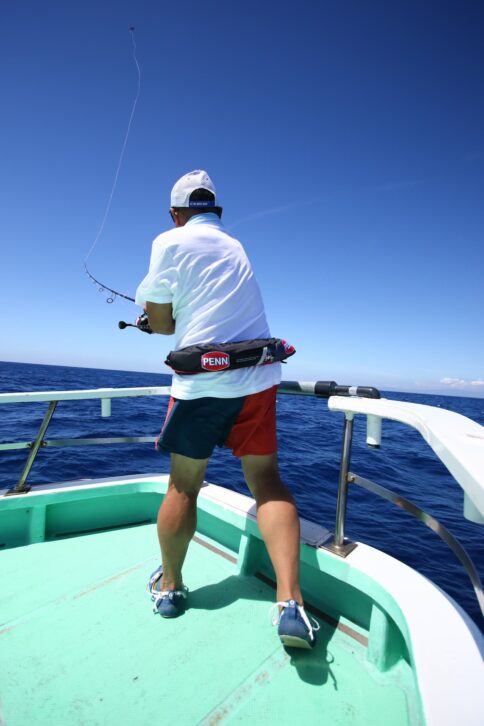
In early March 2026, just before the April release of GUIDUS PE×9, this reporter planned an annual fishing trip targeting Spanish mackerel off the Miura Peninsula’s Kensaki & Matsuwa areas. While Spanish mackerel also migrate into Tokyo Bay and Sagami Bay, large specimens migrate off Kensaki & Matsuwa from February through March. The plan was to target them primarily with plug casting. Depending on conditions and the area, blade jigs or jigging might be used, but fishing in this area during this season is often restricted to casting. The reason is simple: casting is just more fun. For this actual fishing trip, although jigging tackle was prepared, the previous day’s casting yielded good results. Therefore, only the casting gear was brought aboard for the challenge. Therefore, this time I’d like to share my impressions of using the GUIDAS PE×9 specifically for casting.

Plug casting-focused fishing trip. Casting tactics fall into three patterns: targeting baitfish rising while chasing birds, spotting surface strikes and striking, and drifting the boat while blind casting.
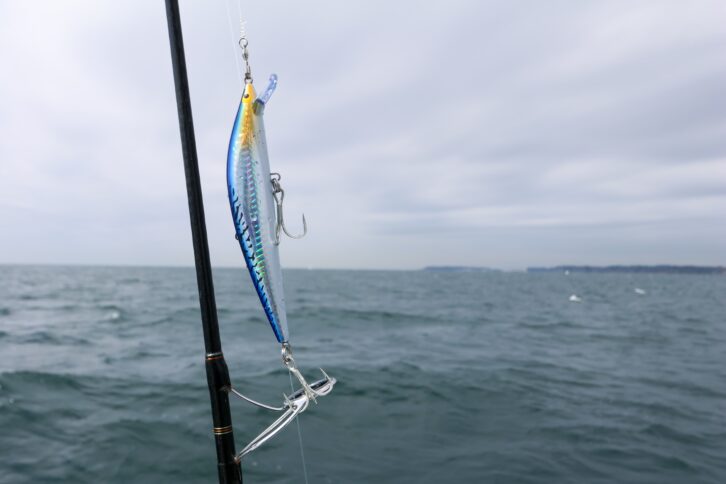
Lures include minnows and jerkbaits. Since Spanish mackerel swim in straight lines, lures with high straight-running stability are more likely to get bites.
Tackle Selection. The go-to lure for sardine bait: K-TEN
Incidentally, for Spanish mackerel casting, the reporter used a 76cm rod with PE #2 line. The leader was nylon 40lb, just under 2 Hiro. With the leader extending about 60cm from the tip in the casting position, this length prevents the knot between the PE line and leader from getting caught in the reel spool. The rod needs sufficient length to properly swing the lure and achieve good casting distance. Casting for Spanish mackerel in this area involves observing bird movements, chasing them to cast, spotting jumps to cast, and continuously casting blind. Previously, Japanese anchovies were the main bait, and since they formed schools, chasing the schools was easier. However, in recent years, Pacific saury have become the primary bait. Consequently, schools now roam over a wider area, making it harder to pinpoint where to target them. Therefore, when chasing a school and getting the boat close, a quick, long cast is necessary from a distance that doesn’t alert the school. Even when casting blind, having the distance to cast increases your chances of a hit.
Regarding the main line, while PE 1.5 is acceptable for prioritizing distance and targeting Spanish mackerel, I’ve consistently used PE 2 for larger fish and greater peace of mind. With PE 2, even if minor line tangles occur, I can continue fishing confidently. While it’s possible to re-tie knots onboard during tangles, prime fishing opportunities strike suddenly. Selecting PE 2 ensures I don’t miss those critical chances.
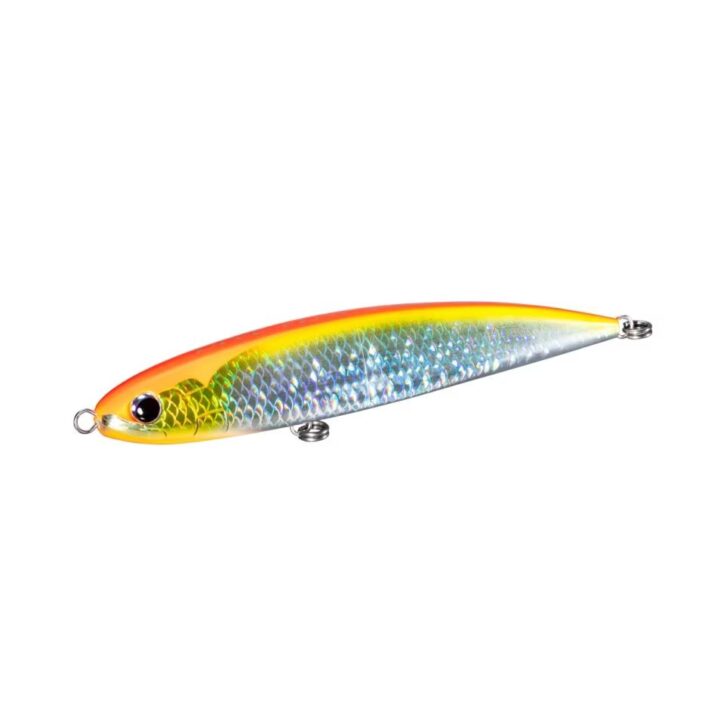
As mentioned earlier, since they’ve been feeding on sardines in recent years, minnows over 140mm are a sure bet. There are also situations where they’re feeding on 160mm sardines or larger, so bigger lures can work too. That’s why the reporter’s main plug is the Tackle House K-TEN Blue Ocean Series 140. The 140 model comes in three versions: the Floating BKF140 (28g), the Slow Sinking BKS (35g), and the Sinking Works BK140SW (51g). Beyond the casting distance differences due to weight, their swimming actions vary. For Spanish mackerel, a fast retrieve is preferred, so the swimming depths of these three models don’t differ significantly. However, their swimming actions differ: the Floating model moves more sharply and dartingly side-to-side, the Slow Sinking model swims naturally in an S-curve while swaying its body sideways, and the Sinking Works model offers a more natural feel with a subdued, less sharp action, as the reporter observed. Consider the Spanish mackerel’s activity level and how to appeal based on water color to choose the right one for your strategy.

The K-TEN Blue Ocean delivers solid casting distance and swims stably at any speed. It’s my go-to, trusted minnow for Spanish mackerel fishing. After trying various options, I settled on the 140mm size, which matches the bait sardines, for this lure.

The basic technique is a steady retrieve at a fast speed.
GUIDUS Performance
At the Osaka Fishing Show, I spoke with a manufacturer representative about the PE line GOSEN [GUIDUS PE×9], which had piqued my interest. Although it wasn’t released yet, I was able to get a sample sent to me.
The first thing I noticed the moment I touched it was its extremely smooth surface and moderate stiffness.
Until now, I hadn’t particularly preferred PE lines with strong stiffness for my own fishing. This was because they tended to cause casting issues, and when jigging with a bait reel, I had the impression they were prone to backlash during short casts.

The initial impression is one of moderate stiffness. The surface is smooth.
So, what kind of line is GUIDUS PE×9?
The development background involves GOSEN’s prior achievement: a 33-strand braided PE line. It was born from a technical challenge and passion—pushing the limits of PE line braiding. Developed to conquer ultra-deep waters at 1000m, it was the world’s first PE×33 line, engineered for sensitivity and water shedding performance. The manufacturing know-how from that line has been generously applied to GUIDUS PE×9.
【Fishing footage with the 33-strand PE line】
“Deep Master Teru Okamoto Challenges the Phantom Benia Kō with the World’s First PE×33”
The new technology adopted is the “Core-Shell Synchronized Design.”
This design precisely synchronizes the elasticity and yield characteristics of the core material and the sheath material, achieving high sensitivity that transmits even the slightest bite with a metallic feel. It also possesses high strength and energy absorption, delivering outstanding durability.

Furthermore, at the center of the 8 base strands, a “Tough Lock Core” using ultra-high molecular weight PE filament with high toughness is employed. Precise twist processing ensures it meshes with surrounding yarns within the shell structure, enhancing shape stability and transmission efficiency.
Furthermore, the surface is braided at an angle that minimizes unevenness. Applied to the outer layer is GOSEN’s long-established SG Processing, precisely integrating the nine yarns. Optimizing the molecular chain alignment within the base yarn achieves high strength and low stretch.

Through these technologies, GOSEN summarizes the characteristics of GUIDUS PE×9 into three key points:
“Metal-like Sensitivity”
“Overwhelming Strength”
“Stress-Free”
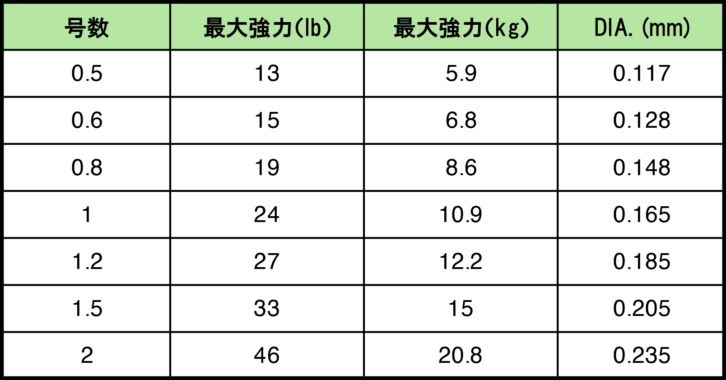
“Metal-like Sensitivity” means detecting subtle bites with a metallic feel. “Overwhelming Strength” comes from enhancing core strength through the PE core fiber. For example, while GOSEN’s standard 8-strand braids like No. 2 offer 35lb, GUIDUS PE×9 boasts 46lb. This allows for the use of finer line sizes. The finer diameter enhances casting distance and reduces susceptibility to tidal currents. Furthermore, “Stress-Free” refers to achieving a smooth surface through optimized blade angles. During casting, it glides smoothly through guides, reducing casting issues while increasing distance and enabling smooth retrieval.
【Actual Fishing Video with GUIDUS PE×9】
Akashi Strait × Latest PE! ROOTS Pro Angler Puts “GUIDUS PE×9” to the Test
RED Nakamura Shows Off! Conquering Tone River Day & Night Games with the Latest Line “GUIDUS PE×9”
Real-Fishing Impressions of GUIDUS PE×9
On the actual fishing day, we heard the same boat had caught a significant number the previous day. The captain was reportedly so busy he had no time to rest.
However, this year’s fish were smaller than usual, with many Medium-class mixed in. Since the main bait was sardines, we started by setting up the K-TEN BKS140.
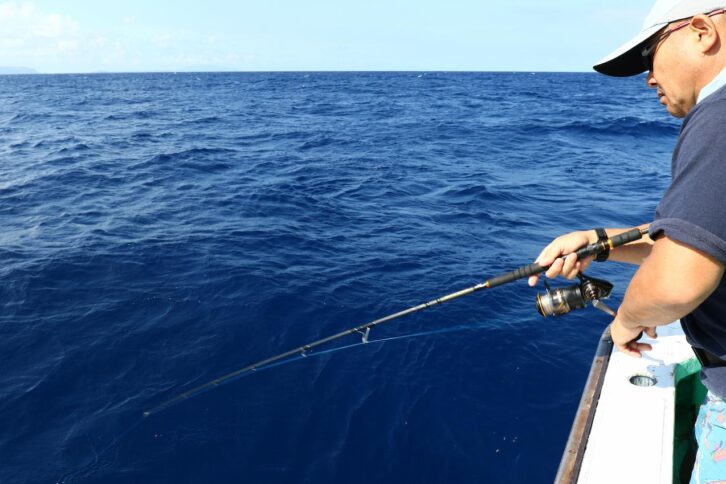
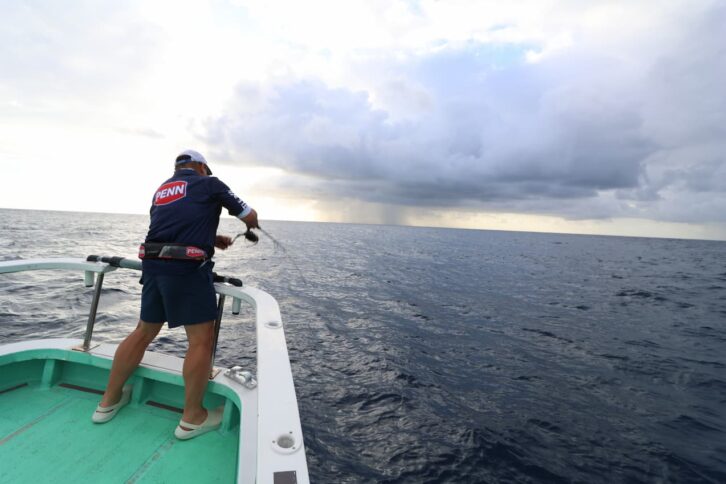
After checking conditions off Jogashima, the boat headed toward Kensaki. Fishing boats targeting Spanish mackerel were trolling. There were quite a few of them. Many recreational fishing boats were also targeting Spanish mackerel. Birds were visible here and there, but since the bait wasn’t rising, they were just circling around. Therefore, we drifted over key spots, waiting for the Spanish mackerel to become active while covering a wide area. The basic approach was to make a full cast with the plug and retrieve it fast after it hit the water. Jerking was sometimes mixed in depending on the situation.
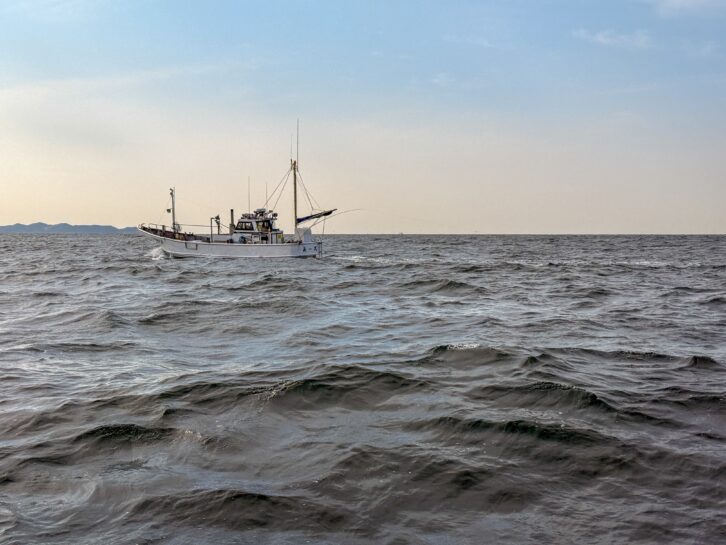
Due to the good catch the previous day, there were many fishermen and charter boats out that day. The fishing boats were moving around with trolling gear, creating high pressure.
Immediately Noticeable Distance on Cast
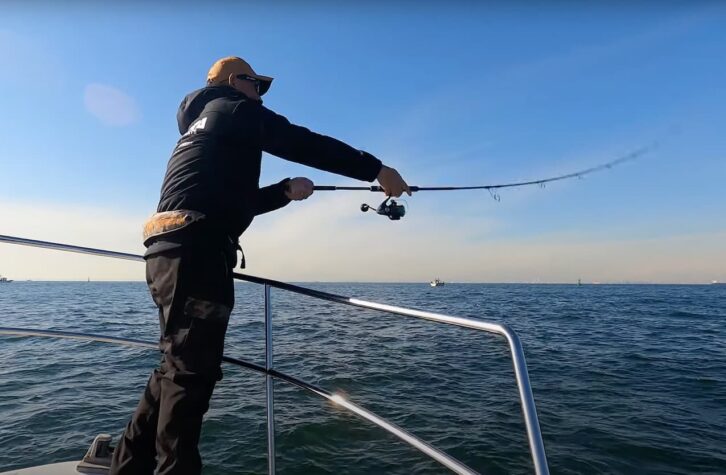
The first thing I felt upon casting was the increased distance.
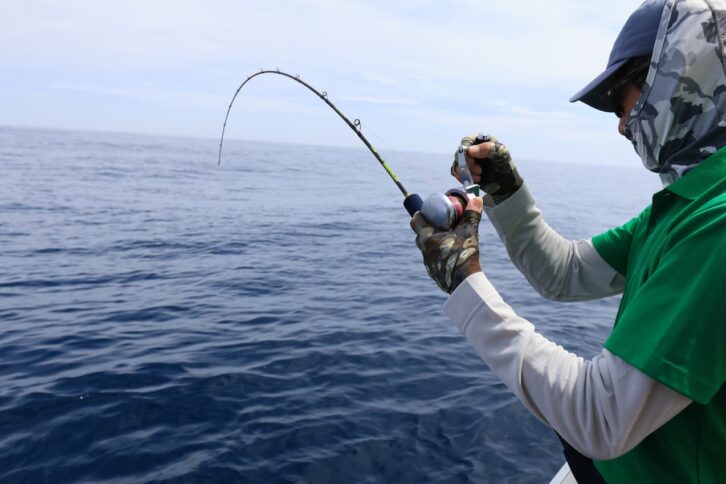
The K-TEN BKS 140 flies comfortably. While the GUIDUS PE×9 felt stiff at first, that stiffness wasn’t excessive; rather, it offered excellent guide clearance. Thanks to its moderate stiffness, the line smoothly glides into the guides. Its smooth surface and true-round construction minimize resistance against the guides, resulting in an exceptionally pleasant casting feel. While wind conditions likely played a role, I felt the casting distance increased by about 10 meters compared to previous years using the same line size.
Exceptionally High Retrieval Performance
When retrieving, the line’s excellent water shedding becomes immediately apparent. Drag resistance is light, and guide noise is minimal. The retrieve feels incredibly smooth.
Furthermore, its low stretch makes it easy to detect changes in the current and clearly conveys the lure’s movement. While this trip targeting Spanish mackerel focused mainly on steady retrieves, the benefits of this low stretch would be even greater in fishing styles that utilize more rod action.
Its performance also suggests it would be easy to initiate action when used for jigging.

Casting and retrieve feel are superb. Minimal tangles and low stress.
The lack of tangles is also impressive
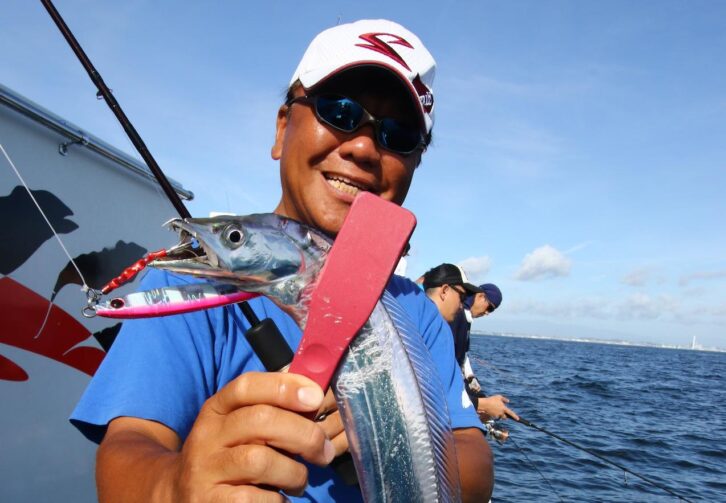
On this day, Spanish mackerel activity was low, and we never reached the stage of targeting bird flocks or surface strikes. The result was three fish for the boat. It was a complete reversal from the previous day, falling into the common pattern for Spanish mackerel fishing: “There were so many bites yesterday.” Consequently, I couldn’t fully assess the sensitivity for bites or the strength during the fight. However, casting for extended periods revealed many things.
First, thanks to its moderate stiffness, there were zero guide tangles. There were two instances where the line formed loops, but the first one untangled immediately. The moderate stiffness made it easy to untangle. The second time it formed a knot, so I took a gamble and pulled hard, and it snapped right off. Even then, the lack of surface degradation on the line was impressive.
Additionally, I cast by hooking my finger under the PE line section below the knot connecting the leader and PE. This section showed no fraying of the PE fibers. This was a point that highlighted the line’s high surface strength.
During this actual fishing session, I fully experienced the GUIDUS PE×9’s high performance in terms of casting distance, handling, and minimal tangles. Going forward, I plan to use it not only for casting games but also for jigging. At that time, I would like to introduce more detailed impressions of its use.

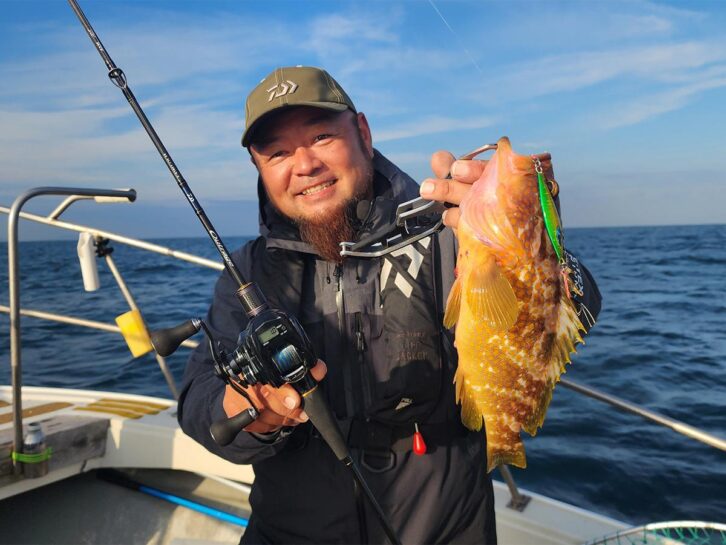
On this day, my fellow anglers caught one medium-sized fish each, ending with a total of three fish. We encountered a situation often seen with Spanish mackerel, where “it was good until yesterday!”
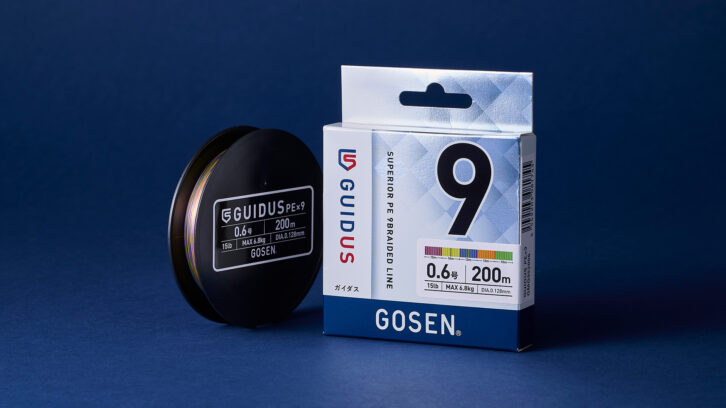
150m spool / 200m spool
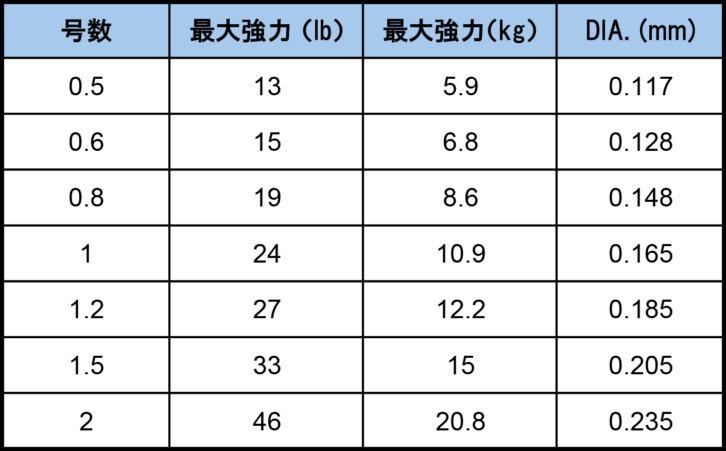
*Price is open
300m spool
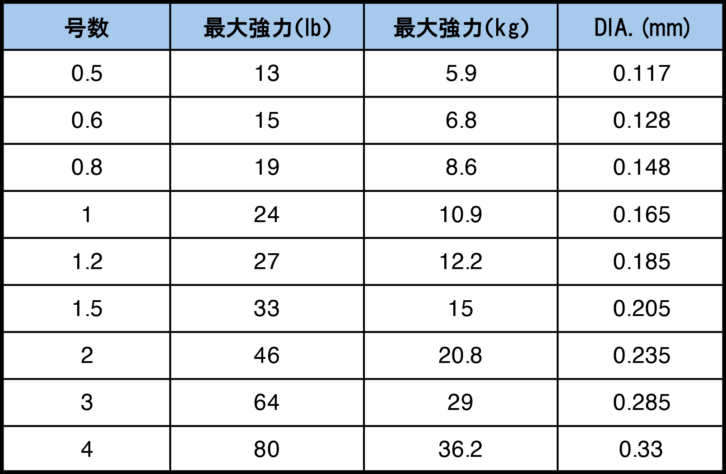
*Price is open
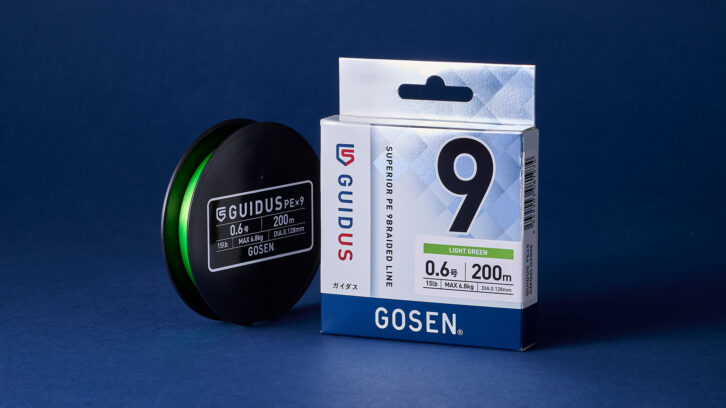
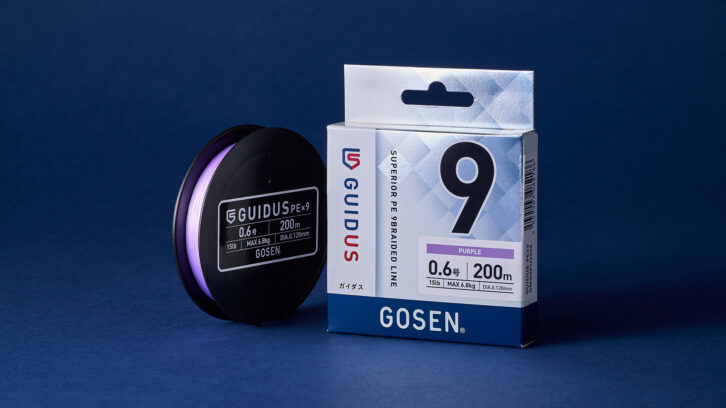
150m spool / 200m spool
300m spool

*Colors: Light Green and Purple. Price: Open
【GUIDUS PE×9】
https://www.gosen.jp/fishing/multipurpose/special/guidus/


関連記事
-

Hiramasa Casting in Genkai Sea ~Past, Present, and Future~! Who will get the trophy fish?
-

Stand up rod and fight the monster class SAKURA LURE DIVISION Tuna casting rod, Ocean Trophy
-
Offshore Real Fishing.Fishing with friends off the southern coast of the Izu Islands!We went after kampachi, sunfish, and yellowfin tuna.
-

Firm hooking and quick avoidance of trouble!
-

It’s finally here! Shockingly high spec! 100m roll PE line in the 1,000 yen range (excluding tax)!
-

Find the fishing glove you’ve been looking for and want
-

Cutting-edge technology has been put into The Super Basic of SLJ Rods
-

Using the latest blank materials XESTA CATAPULT LIGHT SPEC
-

148cm in length for expedition fishing! PENN brand in the world Big Game Casting Rods Slammer Casting Rod
-
Summer to Autumn in the Sea Targeting yellowtail amberjack,greater amberjack and yellowfin tuna Jigging tackle selection in off southern Izu
-
Equipped with new gear for 100 cm per reel! Studio Ocean Mark BLUE HEAVEN L80, L100 [Mid Gear
-

Reeling in fishing line without damaging it Uoya x Studio Ocean Mark “Thread Winding Factory・ITOMAKI KOUJYOU” NEW Model for 2023
-
The Cut-chan Family Powerful Cut-chan joins the Cut-chan family!
-
Blade Tuning “It’s good even when you reel it in! TG bait that is “good even when rolled up!
-

Attention! A NEW flashing-oriented lure for sunfish and GT! Diving pencil “OCEA DIVE FLAT 240F” is now available!
-

“You’re going to go that far?” Fish Scissors that boast such a high level of perfection that you’ll say, “We’ve gone that far? Light Gripper
-

Ranbu for big sea bream Musou for quick hooking
-

Light, sensitive and easy to follow! TENRYU’s tubular tai rubber rods! Four new models have been added to the Red Flip series!
-
Sticks when the hook tip touches! Equipped with a thick wire diameter New size hooks for large fish. Vertical limit 6/0, 7/0
-

The popular rod,
the [SHIMANO OCEA JIGGER INFINITY]
, finally debuts its third generation